
Les droits sociaux dans le débat constitutionnel chilien
PROBLÈME
C'est un moment de changement. Après l'avancée rapide de l'agenda mondial du marché libre au cours des quatre dernières décennies, le paradigme néolibéral est de plus en plus remis en question par ses résultats : des inégalités socio-économiques croissantes et une dégradation écologique massive. De plus, les effets secondaires de la déréglementation de l'économie et de la privatisation des services publics ont compromis la jouissance des droits économiques, sociaux et culturels (ESC) dans le monde entier.
Le Chili fait désormais partie du raz-de-marée contre les politiques de laissez-faire et constitue un point central pour conduire de nouveaux cadres et alternatives institutionnelles pour dépasser l'hégémonie néolibérale. L'appel à une plus grande reconnaissance et garantie des droits ESC a été au cœur des revendications citoyennes, exprimées à travers les vagues successives de troubles sociaux, le processus constitutionnel inachevé de 2016 et le soulèvement social de 2019 qui a conduit à l'élaboration démocratique et participative d'un nouvelle Constitution pour la première fois dans l'histoire du pays.
Dans ce contexte, GI-ESCR a travaillé en étroite collaboration avec des partenaires aux niveaux international, régional et national, pour promouvoir la reconnaissance des droits ESC dans les débats constitutionnels du Chili.
Action
Notre théorie du changement se concentre sur notre capacité à faciliter la discussion au sein de l'écosystème plus large des parties prenantes qui détermine la prise de décision. À cette fin, nous avons rassemblé des preuves et développé de nouveaux récits, construit de larges coalitions pour le plaidoyer et les avons mobilisées pour promouvoir le changement dans le cadre institutionnel et l'opinion publique.
COLLECTER DES PREUVES POUR UN NOUVEAU RÉCIT
GI-ESCR effectue des recherches et collabore avec des partenaires depuis 2019 pour établir des normes de pointe en matière de droits de l'homme sur des questions allant des politiques de transition verte aux services publics. Grâce à un travail collectif et à une focalisation sur les expériences internationales et locales, nous avons:
-
Diffusé auprès des partenaires chiliens le Manifeste mondial pour les services publics, créé par GI-ESCR et huit autres organisations mondiales en tant que vision collective pour mobiliser un mouvement large et fort pour exiger des services publics pour tous.
-
Rédaction et publication du livre : « Les droits sociaux et le moment constitutionnel au Chili », qui a réuni 53 experts internationaux plaidant pour l'incorporation des droits économiques, sociaux, culturels et environnementaux dans la nouvelle Constitution.
-
Organisation de la série de webinaires « Sin recursos no hay derechos » réunissant des experts en fiscalité et en justice fiscale avec des dirigeants politiques.
-
Rédaction et publication du livre "Más que Juanitas" (Plus que Juanitas), qui a compilé pour la première fois les expériences et les points de vue sur les droits ESC de différents groupes de femmes au Chili. Plus de 30 organisations ont rédigé le contenu de cette publication.
-
Co-organisé une rencontre avec l'économiste Thomas Piketty et des membres de la Convention constitutionnelle pour discuter des sujets de justice fiscale.
Toutes ces activités et contenus nous ont aidés à développer un point de départ pour un nouveau récit dans le contexte chilien : la déclaration d'une liste de droits dans la nouvelle Constitution ne suffit pas à garantir les droits sociaux et à favoriser de meilleures conditions de vie pour tous. Pour atteindre cet objectif, il est également nécessaire d'inclure une perspective de genre, d'établir les principes d'une politique fiscale progressiste et l'incorporation de services publics universels et de qualité. Le Chili risque que les droits sociaux deviennent lettre morte sans ces éléments.

Magdalena Sepúlveda, GI-ESCR's exec. director, interviewed by CNN Chile about the book on social rights.

Meeting between the economist Thomas Piketty and members of the Constitutional Convention.

ESCR's executive director and the constituent Tatiana Urrutia during the launch of the book Más que Juanitas.
CONSTRUIRE UN MOUVEMENT
Pour faire avancer ce programme, nous avons travaillé avec d'autres organisations pour construire et mobiliser une coalition autour de la justice fiscale avec les syndicats du secteur public, le « Tax and Fiscal Justice Network in Chile ». Parallèlement, le GI-ESCR et ses partenaires ont réuni les syndicats et les organisations civiles dans une assemblée de la société civile pour les services publics. En conséquence, les deux réseaux ont rédigé des principes et des priorités sur ces sujets pour la future Constitution et ont tracé une voie pour la placer au premier plan du débat constitutionnel avec succès.

Assemby of organisations for public services, convened by GI-ESCR and PSI.

Workshop for drafting a proposal of constitutional content on public services
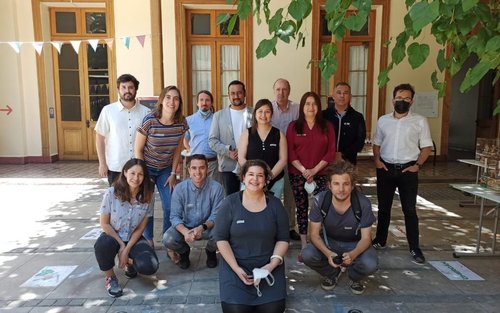
Representatives of the Citizen network for Fiscal Policy in Chile
GAGNER DE L'ELAN
La Convention constitutionnelle du Chili a ouvert différents canaux pour présenter des propositions pour la nouvelle carte. L'un était un canal de participation citoyenne appelé Initiative Populaire de Contenu Constitutionnel et un autre était l'Initiative de Contenu Constitutionnel où les représentants pouvaient présenter des propositions normatives. Le premier mécanisme nécessitait la collecte d'au moins 15 000 signatures de citoyens pour que la proposition soit analysée et votée par la Convention. La deuxième voie nécessitait le soutien d'au moins huit constituants pour être débattue.
Le GI-ESCR et ses partenaires ont décidé d'utiliser les deux mécanismes simultanément, mobilisant une initiative globale sur les services publics et la justice fiscale pour garantir les droits sociaux. En janvier 2022, le GI-ESCR et ses partenaires ont lancé une campagne pour recueillir les 15 000 signatures sous le slogan « Sans ressources et services publics, il n'y a pas de droits sociaux ». La campagne comprenait des médias sociaux, une couverture médiatique et des points de rue pour recueillir des signatures. Le GI-ESCR a coordonné la campagne, qui a progressivement recueilli le soutien de nouveaux mouvements sociaux et de groupes de réflexion progressistes, qui ont contribué à faire passer le mot et à inviter les gens à signer la pétition.
Parallèlement, le GI-ESCR a mené une série de réunions avec les membres de la convention constitutionnelle pour présenter notre proposition et demander leur soutien au sein de la convention. Nous avons approché 32 des 154 membres de la Convention.

Artwork sample of our campaign for the popular initiative of constitutional content

Gi-ESCR's team in the streets of Santiago, collective signatures for the popular initiative.

RÉSULTAT
Le GI-ESCR et ses partenaires ont recueilli 16 388 signatures soutenant l'initiative populaire, ce qui a donné une légitimité citoyenne à notre proposition. Simultanément, ils l'ont présenté à la convention avec le soutien de 12 de ses membres. Par conséquent, le GI-ESCR a assuré que la Convention constitutionnelle discutera et votera sur l'incorporation de services publics universels et de qualité et de dispositions de justice fiscale équitables et progressistes.
INFLUENCER LE DÉBAT
GI-ESCR a également réussi à influencer l'opinion publique, en mettant en lumière un sujet clé et inexploré dans le débat constitutionnel grâce à la mobilisation d'un groupe diversifié de représentants constitutionnels de tout l'éventail politique et de diverses organisations de la société civile autour de la proposition, y compris des mouvements sociaux, le secteur public syndicats, ONG, groupes de réflexion, médias et universités.
Le GI-ESCR continuera à coordonner les réseaux sur les services publics et la justice fiscale, en élargissant l'éventail des partenariats et en établissant des relations de confiance et significatives avec les représentants constitutionnels qui ont soutenu la proposition.
ALLIANCES
-
Public Services International
-
Amnesty International Chile
-
Agrupación Nacional de Empleados Fiscales (ANEF)
-
Asociación Nacional de Empleados del Poder Judicial (ANEJUD)
-
Asociación Nacional de Empleados de Impuestos Internos (ANEIICH)
-
Asociación de Fiscalizadores de Impuestos Internos de Chile (AFIICH)
-
Confederación Nacional de Empleados Municipales de Chile (ASEMUCH)
-
Confederación Nacional de Funcionarios de la Salud Municipal (CONFUSAM)
-
Confederación Nacional de Asistentes de la Educación Municipal de Chile (CONFEMUCH)
-
Confederación Nacional de Profesionales Universitarios de los Servicios de Salud (FENPRUSS)
-
Federación Nacional de Trabajadores de las Obras Sanitarias (FENATRAOS)
-
Fundación Ciudadanía Inteligente
-
Techo Chile - Fundación Vivienda - CES
-
Amnesty International Chile
-
Instituto Igualdad
-
Fundación Rumbo Colectivo
-
Fundación Nodo XXI
-
Friedrich Ebert Stiftung - FES Chile
-
Corporación Humanas
-
Corporación La Morada
-
Asociación de Familiares y Amigos de Prematuros (ASFAPREM)
-
Tremendas Chile
-
Network for Citizen Participation
-
University of Essex - Human Rights Centre
-
University of Concepción - Programme of Law. Enviroment and Climate Change, and Programme of European Studies
-
ONG FIMA
-
Observatorio Ciudadano
COUVERTURE MÉDIATIQUE
-
02 February 2022 - 24 Horas - Revisa las 78 iniciativas populares que pasarán a ser discutidas en la Convención Constitucional
-
02 February 2022 - El Dínamo - Las 77 iniciativas populares que serán discutidas en la Convención Constitucional
-
02 February 2022 - Radio Agricultura - Un total de 78 iniciativas populares se discutirán en la Convención: El listado de las IPN que alcanzaron las 15 mil firmas
-
02 February 2022 - Chilevisión - De la defensa de ahorros previsionales al aborto: Las 78 iniciativas populares que serán discutidas en la CC
-
31 January 2022 - Radio Universidad de Chile (Chile) - Impulsan propuesta de norma para asegurar servicios públicos universales
-
31 January 2022 - El Desconcierto (Chile) - A un día para cierre del plazo: 60 iniciativas populares de norma logran firmas necesarias
-
29 January 2022 - El Ciudadano (Chile) - “Servicios públicos para la igualdad de género” (Public services for gender equality). An Op-Ed by Programme Officer Valentina Contreras and Nayareth Quevedo, PSI Secretary for the Southern Cone Subregion.
-
27 January 2022 - Página 19 (Chile) - Iniciativa Popular: Servicios Públicos Universales y de Calidad y Política Fiscal Justa para la Garantía de Derechos Sociales.
-
25 January 2022 - El Mostrador (Chile) - “Sin recursos ni servicios públicos no hay derechos": Sindicatos y organizaciones presentan iniciativa popular de norma para garantizar derechos sociales. Along with partners, GI-ESCR launched a popular initiative to include in the Chilean new Constitution the promotion of universal and quality public services and tax justice as mechanisms to guarantee economic, social and cultural rights in practice.
-
20 January 2022 - El Mostrador (Chile) - Servicios públicos para la igualdad de género: "La Convención tiene la capacidad de transformar las condiciones de vida de las mujeres". An Op-Ed by Programme Officer Valentina Contreras and Nayareth Quevedo, PSI Secretary for the Southern Cone Subregion.
