Herramientas de Accesibilidad

Seleccione su idioma

La pandemia de COVID-19 y los derechos
Económicos, Sociales Y Culturales

BLOG GI-ESCR
45 autores comparten sus reflexiones

Es probable que la crisis actual generada por la pandemia de COVID-19 y las medidas implementadas para controlarla tengan efectos duraderos y potencialmente profundos y estructurales en las sociedades. Desde los impactos en la salud, la vida, el acceso a los alimentos, los medios de subsistencia y la vivienda, hasta el socavamiento de las libertades civiles y la privacidad, el deterioro de los derechos humanos en todo el espectro, y en particular para los grupos desfavorecidos, es profundamente preocupante.

Como una respuesta rápida a la pandemia de COVID-19, GI-ESCR lanzó una serie de blogs en marzo de 2020 para fomentar debates sobre cómo abordar la crisis desde la perspectiva de los derechos humanos. 45 autores, defensores, profesionales, legisladores y académicos contribuyeron a un total de 32 artículos que invitan a la reflexión entre abril y octubre de 2020, abriendo un espacio para reflexionar y evaluar los efectos de la pandemia de COVID-19 en el disfrute de los derechos ESC.
Image
Las diversas contribuciones destacan la importancia de poner los derechos económicos, sociales y culturales, el cambio climático y la igualdad de género en el centro de las respuestas políticas a la pandemia. Como curadores del blog, aseguramos la máxima visibilidad para las voces no representadas. Así, de 45 autores, el 71% eran del Sur Global y el 75% eran mujeres.

Algunos artículos

TODAS LAS CONTRIBUCIONES POR ÁREA TEMÁTICA

As a custodian of these valuable contributions aimed at advancing the debate on such crucial issues, GI-ESCR has compiled them into a publication, classifying them thematically.

The full publication, which is part of GI-ESCR’s series “Pushing the frontiers of ESC rights” will soon be available here.

Click on the thematic area of your choice here below to display the content.

Un tema fuerte y constante de los blogs es la desigualdad. Como señalan muchos de los autores, COVID-19 ha "iluminado la fragmentación y las desigualdades sociales dentro y entre nuestras sociedades" y ha mostrado la importancia de una sociedad igualitaria.

Las personas en situación de pobreza tienen más probabilidades de trabajar con contratos precarios, tener condiciones de trabajo peligrosas o insalubres, salarios bajos y experimentar condiciones de vivienda inadecuadas y falta de agua y saneamiento, todo lo cual hace que les resulte muy difícil protegerse contra la virus y aislarlo adecuadamente. Por ejemplo, en relación con el derecho a la educación, el cierre de escuelas, el aprendizaje a distancia y el acceso desigual a las computadoras e Internet también están exacerbando la desigualdad de generación en generación y la vulnerabilidad a otras crisis inevitables.

Para ilustrar cómo el COVID-19 está afectando a las personas en situación de pobreza, muchos artículos llaman la atención sobre situaciones de países particulares. Anita Nyanjong, por ejemplo, describe cómo en Kenia muchos de los que viven en barrios marginales y asentamientos informales corren el riesgo de ser desalojados por la fuerza de sus hogares, lo que sin ninguna posibilidad de alojamiento alternativo aumentará su riesgo de contraer el virus. Victoria Ibezim-Ohaeri y Emem Okon analizan la situación en Nigeria y cómo las personas que viven en la pobreza en áreas de extracción de recursos, como el delta del Níger, ya han visto su salud socavada por décadas de contaminación y, por lo tanto, es especialmente probable que sufran complicaciones graves. del virus Con respecto al Reino Unido, Imogen Richmond-Bishop y Sara Bailey se refieren a estadísticas oficiales que muestran que "los residentes de las partes más pobres de Inglaterra y Gales mueren el doble que los residentes de las más ricas", y lo atribuyen a décadas de austeridad que reduce acceso a una vivienda adecuada y protección social que ha exacerbado los problemas de salud y menoscabado la capacidad de las personas para trabajar desde casa.

Muchos de los blogs también elaboran sobre la situación de determinados grupos de población que, debido a la discriminación sistémica por motivos de etnia, raza, estatus migratorio, sexo, género, discapacidad, condición de minoría o indígena, tienen más probabilidades de vivir en la pobreza extrema y verse afectados de manera desproporcionada por el virus. Como explica Joshua Castellino, la situación de las minorías también se ve agravada por la “política del odio” y la creciente estigmatización, que ha impedido que muchos accedan a un trabajo digno, vivienda y atención médica. Dicha política ha sido impulsada por la desigualdad y el aumento de la pobreza que da como resultado que las personas sean "fácilmente incitadas al odio por intereses poderosos". Reconoce así el COVID-19 como una oportunidad para acabar con “el juego del odio”, para reconocer y remediar la situación de esas minorías y protegerlas de la estigmatización y la discriminación. Castellino considera esto como "la única ruta hacia el éxito", y señala la posibilidad de un "desplome económico y social sistémico" si esas comunidades continúan siendo "chivos expiatorios".

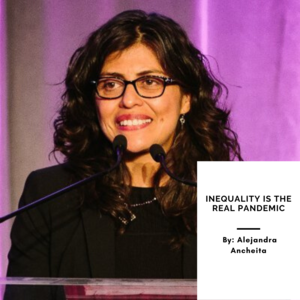
Varios blogs destacan la situación de los inmigrantes temporales e indocumentados que probablemente ya están experimentando altos niveles de pobreza, opciones de empleo limitadas, alojamiento superpoblado y acceso restringido a la atención médica y la protección social (debido a su estatus legal), lo que los hace a ambos en un mayor riesgo. de contraer el virus y de verse afectados por la contracción económica mundial. Alejandra Ancheita llama la atención sobre los programas de migración laboral temporal que reclutan inmigrantes para trabajar a través de las fronteras, a menudo con muy poca paga y pocas protecciones laborales. En el Reino Unido, Imogen Richmond-Bishop y Sara Bailey señalan que algunos inmigrantes no son elegibles para recibir ayuda del gobierno y corren un mayor riesgo de pobreza y exposición al COVID-19 debido a viviendas inadecuadas y prácticas laborales inseguras. Además, como observó Stefano Angeleri, incluso cuando se ofrece apoyo gubernamental a los migrantes, como en Irlanda, donde el gobierno ha permitido que los migrantes irregulares se hagan la prueba de COVID-19 y reciban tratamiento, e hizo el “pago por desempleo pandémico de Covid-19”. ” y otros pagos únicos (independientemente del estatus migratorio) disponibles; tales medidas son temporales y, a menudo, no cumplen con los requisitos legales de derechos humanos.

Con respecto a las personas y pueblos indígenas, Sharifah Sekalala y Belinda Rawson describen su vulnerabilidad específica a la infección por COVID-19 debido a la negación histórica de sus derechos que ha resultado en viviendas deficientes y acceso insuficiente a la atención médica y los servicios esenciales. Sin embargo, los gobiernos aún deben tomar respuestas específicas que aborden los impedimentos estructurales para el disfrute de sus derechos. Por lo tanto, los autores hacen un llamado a los gobiernos para que aseguren que sus obligaciones de derechos humanos estén en el centro de la respuesta a la crisis y aborden las desigualdades arraigadas y las disparidades resultantes, incluso preservando las tradiciones, abordando las prácticas discriminatorias institucionalizadas y mejorando las condiciones que subyacen a los determinantes sociales de la salud.

Muchos autores también llaman la atención sobre cómo la pandemia ha afectado a las mujeres, incluido el aumento de su ya desproporcionada carga de cuidados debido al cierre de escuelas y sistemas de salud sobrecargados (Kavita Naidu y Misun Woo). Victoria Ibezim-Ohaeri y Emem Okon también describen cómo en Nigeria los roles tradicionales de las mujeres, como ir a buscar agua y leña, ir a los mercados y cuidar a los enfermos, les han impedido cumplir con los protocolos de seguridad recomendados para quedarse en casa. Alejandra Ancheita destaca específicamente cómo los bloqueos y el aislamiento social forzado han exacerbado la violencia contra las mujeres en muchas regiones del mundo, incluso en Europa y América Latina.

Sin embargo, al exponer el sistema de cuidado injusto en muchas sociedades y su vínculo con la privación de derechos de las mujeres y una mayor vulnerabilidad a la violencia doméstica, COVID-19 también está creando un espacio para el cambio. Laura Pautassi destaca la importancia tanto de valorar el cuidado como un trabajo intenso como de reconocerlo como un derecho humano (el derecho a cuidar, a ser cuidado y al autocuidado) que luego llevaría a la implementación de “universales y transversales”, de género. -políticas focalizadas, con “presupuestos regulares”, a nivel gubernamental, empresarial y social.  

Varios de los blogs también destacan los efectos catastróficos de la pandemia en los niños. Aoife Nolan y Judith Bueno de Mesquita llaman la atención sobre los efectos devastadores en los niños tanto del virus como de las respuestas estatales a la pandemia que limitan o hacen retroceder los derechos de los niños. Esto incluye el impacto del confinamiento en la salud mental, la capacidad de jugar, los ingresos de los padres y el acceso a los alimentos, y el efecto del cierre de escuelas en el derecho a la educación y su exacerbación de la desigualdad. Esto no se limita sólo a los países en desarrollo. Según Imogen Richmond-Bishop y Sara Bailey, en el Reino Unido a muchos niños también se les niega el derecho a la educación debido a la falta de equipos de TI, como computadoras portátiles y banda ancha. Sin embargo, como en muchas otras situaciones, esto puede abrir un espacio para reexaminar y remediar la situación de los más marginados. Con respecto específico al cierre de escuelas, Ann Skelton se enfoca en cómo el COVID-19 puede ayudar a restablecer las prioridades para garantizar que las personas más desfavorecidas reciban la mayor asistencia. Está claro que no todas las escuelas pueden abrir al mismo tiempo, y un enfoque escalonado también podría aumentar la desigualdad, ya que los niños en las escuelas con menos probabilidades de estar preparados para el COVID-19 para reabrir tienen más probabilidades de recibir una educación de baja calidad y tienen un acceso muy limitado a los recursos en línea. Dada esta realidad, Anne Skelton argumenta que los gobiernos deben darse cuenta de su obligación inmediata de planificar el restablecimiento completo de las escuelas con especial atención a aquellos que tienen más probabilidades de quedarse atrás, y utilizar estrategias de reingreso equitativas e innovadoras para abordar las necesidades de todos los estudiantes.

El Comité de Derechos Económicos, Sociales y Culturales de la ONU, en su orientación a los Estados para responder a la pandemia, también subraya la importancia de los principios de igualdad y no discriminación tanto para abordar las crisis como para garantizar que la sociedad mantenga la resiliencia ante futuras crisis. crisis Como destaca Rodrigo Uprimny Yepes (miembro del Comité DESC) en su blog, estos incluyen asegurarse de que la movilización de recursos no recaiga en los más vulnerables y debe estar “basada en criterios de progresividad tributaria y justicia distributiva”; también es necesario tomar medidas especiales apropiadas dirigidas a las personas en situación de pobreza y los grupos de población que experimentan discriminación, como las mujeres y los migrantes, que pueden verse afectados de manera desproporcionada por las crisis.

NEWSLETTER

¡No te pierdas ninguna actualización!
Image

Seleccione su idioma

Social Media:

Log in

Climate and Environmental Justice

We have advanced rights-based and gender-transformative transition frameworks through research that centres the lived experiences of women and marginalised communities on the frontlines of extractive energy policies, promoting climate and energy frameworks attentive to the social and care-related impacts of transition pathways. We have developed a clear vision for a gender-just transition, firmly rooted in gender and human rights norms, establishing both the legal basis and the direction for the transformative changes our planet and societies urgently need. In particular, the ‘Guiding Principles for Gender Equality and Human Rights in the Energy Transition’, a collective effort built through online consultations, an in-person workshop and multiple rounds of revision with activists, practitioners and experts from around the world, outline a transformative vision for reshaping global energy systems through a human rights and gender equality lens.

Our work recognises that the climate emergency is both an existential threat and an opportunity to reimagine societies built on social, gender, economic and environmental justice. We ground our advocacy in feminist and intersectional principles, prioritising the agency and perspectives of communities in the Global South who have contributed the least to the climate emergency yet face its most devastating consequences. Central to our approach is the understanding that energy is not merely a commodity but a fundamental human right; essential for dignity, health, education, work and the realisation of countless other rights. We challenge approaches to the energy transition that risk replicating the harmful patterns of fossil fuel extraction and, instead, advocate for transformative policies that ensure human rights and gender equality as central to building climate-resilient societies rooted in dignity, justice and planetary well-being.

What's next?

We will continue to challenge approaches that treat energy transition as merely a technical shift, instead positioning it as an opportunity to reimagine economies and societies rooted in dignity for all, with particular attention to communities in the Global South who have contributed least to the climate emergency yet are most exposed to its worst effects.

We will connect community-level evidence and the lived experiences of those on the frontlines of extractive policies to national reform and global norm-setting, breaking down silos between human rights, gender, and climate movements, and advancing a shared vision that recognises just transitions as not only fundamental to achieving climate-resilient and sustainable societies, but as transformative pathways that advance social and gender equality, redistribute power and resources equitably, and ensure that energy systems serve the public good rather than profit.

We will mainstream rights-based and genderjust transition priorities in key multilateral spaces (particularly, within the Just Transition Work Programme and the to-be-developed Just Transition Mechanism, within the UNFCCC) to guarantee that just transitions are advanced at all levels.

We will also translate our work, through strategic advocacy, into at least two concrete policy wins, whether promoted, adopted, implemented, or scaled, in priority countries (Argentina, Brazil, Chile, Mexico, Colombia, South Africa, or Kenya), ensuring these policies align with human rights standards, centre gender equality, and reflect the needs and views of affected communities.

We will build momentum for the progressive recognition of the right to sustainable energy to shift dominant narratives away from purely extractive solutions that sideline gendered impacts, community participation, and Global South perspectives.

Economic Justice and Climate Finance

Our work has transformed the global discussion on fiscal policy in a more just, emancipatory and sustainable direction. Our approach has combined both high-level, expert contributions within decisionmaking circles, with bold, impactful work on narrative change with the general public.

We have been instrumental in the inclusion of human rights as a guiding principle of the future United Nations Framework Convention on International Tax Cooperation, a multilateral instrument with the potential of raising approx. USD 492 billion per year in public revenues currently foregone to global tax abuse. In the process leading to the ‘Compromiso de Sevilla’ decided at FfD4, we proposed and succeeded in creating a specific human rights workstream within the Civil Society Financing for Development Mechanism, which was critical to ensure that explicit commitments on the matter were included in the negotiating outcome. In a context of cutbacks in multilateral institutions, we have amplified the capacities of technical experts, providing rigorous technical support and leveraging our influence to ensure the enactments of groundbreaking standard-setting instruments, such as the 2025 UN Committee on Economic, Social and Cultural Rights Statement on Fiscal Policy and Human Rights, and the first ex oficio hearing on the Inter-American Commission of Human Rights on Fiscal and Economic Policies to Address Poverty and Structural Inequality, leading to an upcoming thematic resolution on the matter. We have also bridged the silos between multilateral tax discussions and climate finance debates, promoting ambitious financing commitments to increase international and domestic resource mobilisation during COP 28, 29 and 30.

At the regional level, our engagement with fiscal cooperation platforms such as the Platform for Fiscal Cooperation of Latin America and the Caribbean (PTLAC), where we are member of its Civil Society Consultative Council, and the African Anti-IFFs Policy Tracker, for which we participated in the pilot mission in Ivory Coast together with Tax Justice Network Africa (TJNA), have been critical in cementing a growing engagement between tax administrations and ministries of finance with international legal experts, exploring actionable and transformative initiatives, such as the taxation of high-net-worth individuals, beneficial ownership registries and corporate countryby-country reports, to be implemented at the international level.

At the local level, our interventions in fiscal reform debates in Chile, Brazil, Colombia and Nigeria have contributed to shaping legislative outcomes in a more progressive, rights-compliant direction.

As for our leadership in narrative change, we have a measurable track record in delivering tailored, innovative campaigns which have decisively expanded economic justice constituencies by appealing to a broader tent. In Latin America and the Caribbean, we created the ‘Date Cuenta’ campaign, coordinating over 40 organisations across civil society to deliver plain language, innovative messaging connecting progressive fiscal reforms to the financing of health, education and social protection. ‘Date Cuenta’ generated over 55 original campaign messages that were tailored to the realities of seven priority countries (Argentina, Chile, Colombia, Mexico, Paraguay, Peru and Honduras) and disseminated in Spanish, Portuguese and English. In doing so, we convened more than 65 online co-creation workshops with partners, coordinating a unified communications strategy which combined digital outreach, press and media coverage, and collaboration with influencers. Ultimately, ‘Date Cuenta’ resulted in more than 60,000 interactions on social media, coverage in major regional and international media outlets, including El País, Deutsche Welle, Bloomberg and France 24, and the participation of at least 63 social media influencers through 58 dedicated publications. In collaboration with Fundación Gabo and the Friedrich Ebert Stiftung, we also organised a two-day workshop in Bogota with 20 journalists from 13 countries, building a regional network trained in a human rights-based approach to fiscal policy that has since generated published media coverage on outlets such as La Diaria, Ciper, El Diario Ar and Milenio. Through ‘Date Cuenta’ and our regional advocacy, we strengthened civil society engagement in key processes, including the Financing for Development track and FfD4, co-organised highlevel dialogues with states and civil society from Latin America and Africa.

What's next?

We will shape the UN Tax Convention and its Protocols so they embed human rights principles, and we will stay engaged through follow-up processes (including the expected Conference of the Parties) to support effective implementation. We will keep linking tax and climate finance so that new resources mobilised through fiscal cooperation are channelled to adaptation, mitigation, and loss and damage, in line with UNFCCC commitments.

Public Services for Care Societies

We have translated participatory research into accountability and policy outcomes.

In Ivory Coast, our work with Mouvement Ivoirien des Droits Humains and affected communities since 2023 exposed how privatisation and lack of accountability restrict access to quality healthcare. It contributed to the closure of 1,022 illegal private health centres, an executive instrument strengthening the regulation of private hospitals across the country, and the creation of a permanent complaints management committee in healthcare through a bylaw issued by the prefect of Gagnoa. Partners engaged through this process also advanced concrete improvements at facility level: members of the Gagnoa Midwives Association who took part in the participatory action research pooled resources to renovate the neonatal unit of the Regional Hospital, and the Director of the Gagnoa General Hospital launched an action plan to expand services and improve patient reception, with the facility receiving the award for best hospital in the country in 2025.

In Kenya, our research with the Mathare Education Taskforce documented the absence of public schools and the expansion of private provision, evidencing impacts on households and caregivers and strengthening demands for free, quality public education. This work contributed to stronger community agency and collective organisation, alongside ongoing strategies ranging from communications to litigation to secure a public school in the area, some involving GI-ESCR and others led independently.

Across Africa, this work is complemented by a multi-country study examining the human rights implications of austerity in education and health, including how regressive fiscal policies, rising debt burdens and persistent underinvestment undermine the financing and delivery of public services.

In Latin America, from 29 November to 2 December 2021, over a thousand representatives from over one hundred countries, from grassroots movements, advocacy, human rights, and development organisations, feminist movements, trade unions, and other civil society organisations, met in Santiago, Chile, and virtually, to discuss the critical role of public services for our future. Following the meeting, the Santiago Declaration on Public Services was adopted to demand universal access to quality, gender-transformative and equitable public services as the foundation of a fair and just society.

We are currently advancing work on care systems, linking public services and fiscal justice through integrated research, advocacy and communications, including a regional campaign framing care as a collective responsibility requiring sustained public investment.

What's next?

In Ivory Coast, we will evaluate and strengthen the complaints management committee and position it as a replicable model for other health facilities. In Kenya, we will support the Mathare community to co-design a model public school for Mabatini and Ngei wards, grounded in human rights standards. Building on our multi-country austerity study, we will drive national advocacy on financing for education and health: advancing reforms in Ghana; launching a fiscal policy and public services financing agenda in Kenya through the CESCR process and targeted coalition work; and, in Nigeria, using the new tax acts in force since 1 January 2026 to catalyse a national accountability campaign for adequately funded, quality public services. In Latin America, we will amplify locally led care pilots across 8 countries and turn lessons into influence—advancing care policies that strengthen care organisations, protect care workers’ rights, support unpaid caregivers, include disability and family networks, and redistribute care more equitably.