
Don´t miss any updates!

On the Ground
Explore our work with partners, globally and locally, to tackle social and economic injustice using a human rights lens.
We Delivered a Joint Civil Society Statement During Kenya’s UN CESCR Review
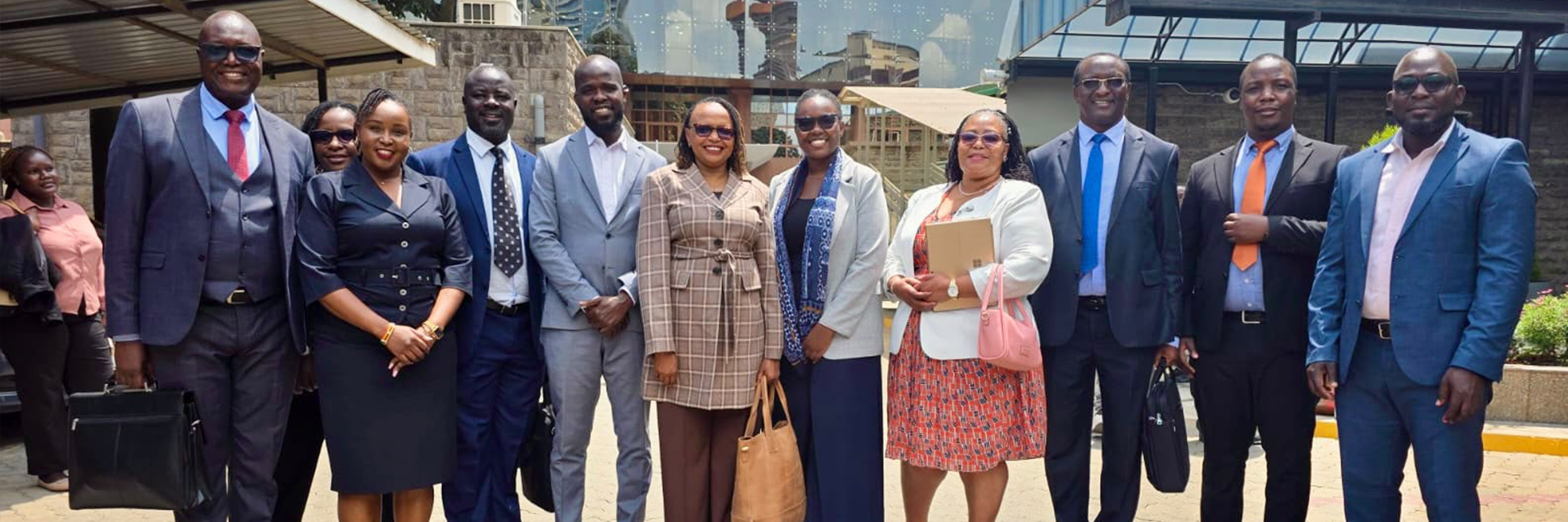
During Kenya’s review by the UN Committee on Economic, Social and Cultural Rights, Roselyne Onyango, Associate Programme Officer for Africa at GI-ESCR, delivered a joint civil society statement together with KHRC, Hakijamii and EACHRights on how debt servicing and austerity-driven fiscal policies continue to undermine the rights to education and health in Kenya.
Read here:
Thank you Chair, My name is Roselyne Onyango submitting on behalf of the Global Initiative for Economic Social and Cultural Rights, Kenya Human Rights Commission, Hakijamii and EACHrights. We thank the Committee for the opportunity to highlight how debt servicing and austerity-driven fiscal policies continue to undermine the realisation of the rights to education and health in Kenya.
Despite public commitments and episodic reforms, Kenya’s fiscal trajectory remains defined by austerity and fiscal consolidation shaped by engagements with international financial institutions. Between June 2024 and September 2025, public debt increased by 1.42 trillion shillings, with debt servicing absorbing 68% of total government revenue, stripping away the funding needed for essential social services such as public education and health.
In the education sector, Kenya appears to meeting international budgetary benchmarks in nominal terms, where about 29% of the 2025 budget was allocated to education. However, this allocation fails to account for inflation, a growing school-age population, or the resources required to fully implement Competency Based Education. In practice, most education spending is absorbed by recurrent costs, mainly wages for existing staff, while development funding for classrooms, learning materials and inclusive infrastructure remains insufficient and increasingly politicised. In this context, we ask the Government: how can it effectively plan for public education without first establishing the actual cost of education in Kenya?
In the health sector, public financing remains far below regional and international benchmarks. Repeated budget cuts to key programmes, and the declining development expenditure, have accelerated the expansion of private, for-profit healthcare, weakening the State’s role as the primary duty bearer. The Social Health Insurance Fund, introduced under IMF-linked reforms and intended to advance universal health coverage, continues to raise serious equity concerns. Its means testing contribution model, is poorly suited to Kenya’s largely informal economy as it fails to account for household size, chronic illness or cost of living disparities, while the benefits package remains unclear and underfunded.
In conclusion, of the more comprehensive set of recommendations in our written submissions, we would particularly like to emphasise the following to this Committee:
- First, Kenya must strengthen its domestic resource mobilisation by curbing its revenue leakages. This requires tackling illicit financial flows, ending wasteful tax incentives and adopting progressive tax policies to ensure that domestic resources are directed towards social services.
- Second, Kenya must adopt transparent, participatory and human rights-based debt management practises. This means, conducting human rights-based debt sustainability analyses before borrowing and fully disclosing loan agreements, and related conditionalities to enable public scrutiny and accountability.
- Finally, Kenya must prioritise sustainable and equitable public financing for public education and health. Budgets allocation should be based on actual needs and avoid arbitrary cuts. The government must protect funding for inclusive public education and affordable healthcare.
Chair and distinguished members, without a decisive shift towards people-centred fiscal policies, Kenya will remain unable to fulfil its obligations under the Covenant. We thank the Committee for its attention and stand ready to provide any further clarification.
Thank you
Related Articles
SITEMAP
TAKE ACTION
NEWSLETTER
