
Don´t miss any updates!

On the Ground
Explore our work with partners, globally and locally, to tackle social and economic injustice using a human rights lens.
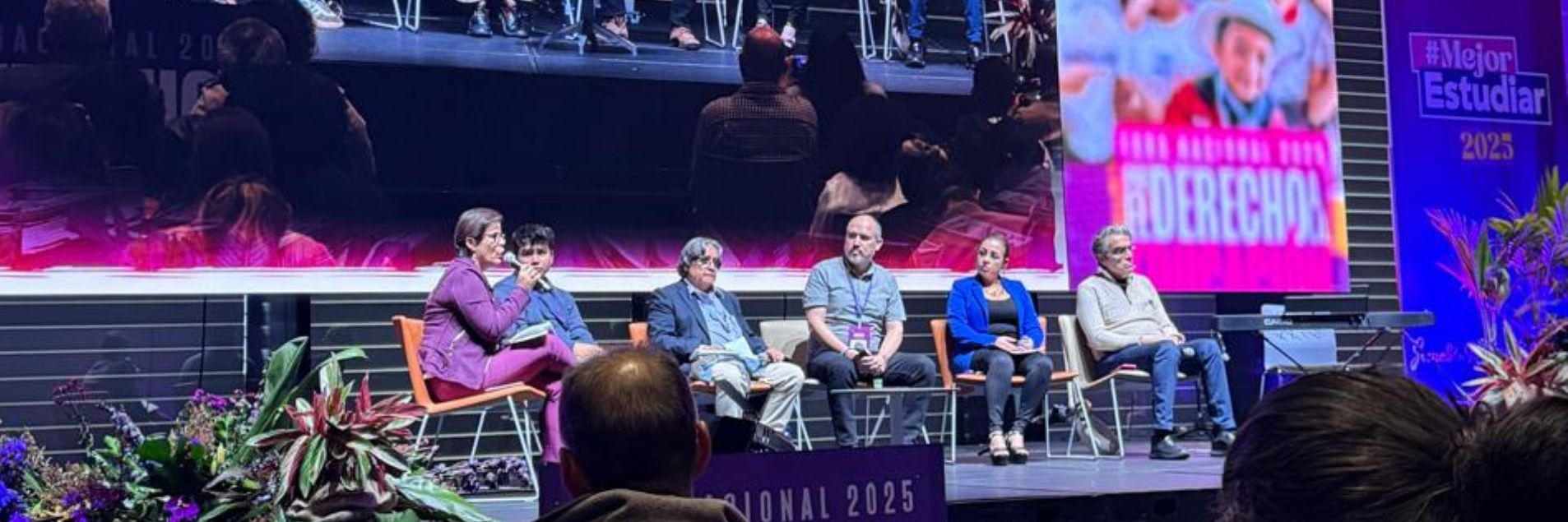
We participated in the National Forum for the Right to Education in Colombia for the Preparation of the next Education Sector Plan (ESP)
On November 24–25, 2025, our Programme Officer on the Right to Education, Juana Barragan Díaz, attended the National Forum for the Right to Education in Colombia, a key moment in the development of the country’s IV Ten-Year Education Sector Plan (2026–2035).
The forum, held in Bogotá and convened by the Ministry of Education, brought together a wide range of stakeholders from across the country, including representatives from student platforms, trade unions, civil society organisations, communities, and educational institutions. It featured over 20 national and international speakers and was built upon more than 100 territorial dialogues, as well as the outcomes of institutional, municipal, and departmental education forums, among others.
The event began with the presentation of the ‘Declaration of Minimum Agreements’, marking the starting point for the formulation of Colombia’s IV ESP. Developed by the Mixed Commission on October 24, it outlines six key areas of action and aims to serve as the foundation for achieving a broader social and political consensus on the future of education in Colombia. The Declaration, led by the central premise “Education is a fundamental pillar of any social transformation”, was signed by the Minister of Education, Daniel Rojas Medellín.
The six agreed areas of the Declaration are:
- Sustainable public financing of all levels of education (from early childhood to adult education) by the State.
- Territorial relevance and democratic participation in educational transformation.
- Teacher training as a central pillar, including critical, transformative, and dignity-based approaches.
- Inclusive education for children, adolescents, youth, and adults with disabilities.
- Respect for cultural diversity in education.
- Social participation and real influence in school governance across all levels.
The two-day forum featured rich discussions and panel sessions aimed at shaping the upcoming ESP, as well as artistic presentations by children and youth, reinforcing the inclusive and participatory and nature of the forum.
As part of the event, GI-ESCR had the opportunity to meet and exchange with partners from the National Coalition for the Right to Education in Colombia, strengthening ongoing collaboration and shared commitments.
GI-ESCR was honoured to be part of this significant space and reaffirms its commitment to advancing the right to education in Colombia and globally, advocating for strong, inclusive, and publicly funded education systems.
Related Articles
SITEMAP
TAKE ACTION
NEWSLETTER
