

Don´t miss any updates!

On the Ground
Explore our work with partners, globally and locally, to tackle social and economic injustice using a human rights lens.
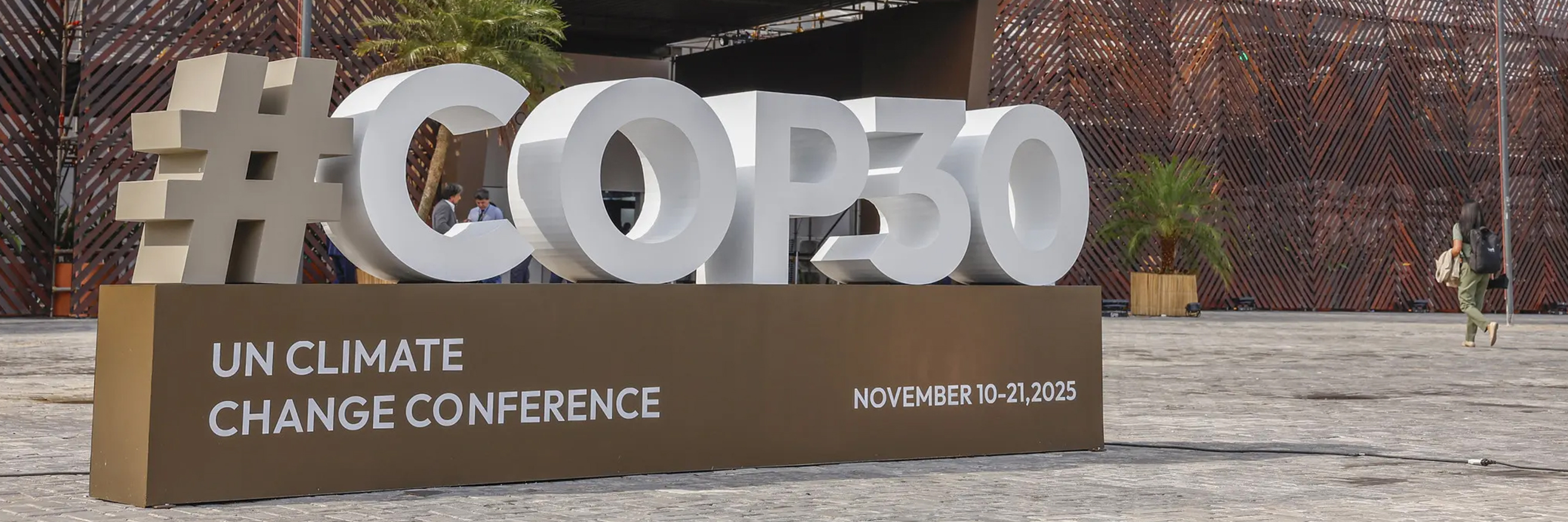
COP30: Gaps, Gains and the Road Ahead
We were present at the 30th session of the Conference of the Parties to the United Nations Framework Convention on Climate Change (COP30), which was held from 10 to 21 November in Belém do Pará, Brazil. Here is a short overview of the main developments, including the progress achieved and the challenges that marked COP30.
What COP30 Delivered
The outcomes of the Conference, the first since the historic rulings of the International Court of Justice and the Inter-American Court on Human Rights, left much to be desired and, at the same time, gave us hope to keep advocating for climate justice.
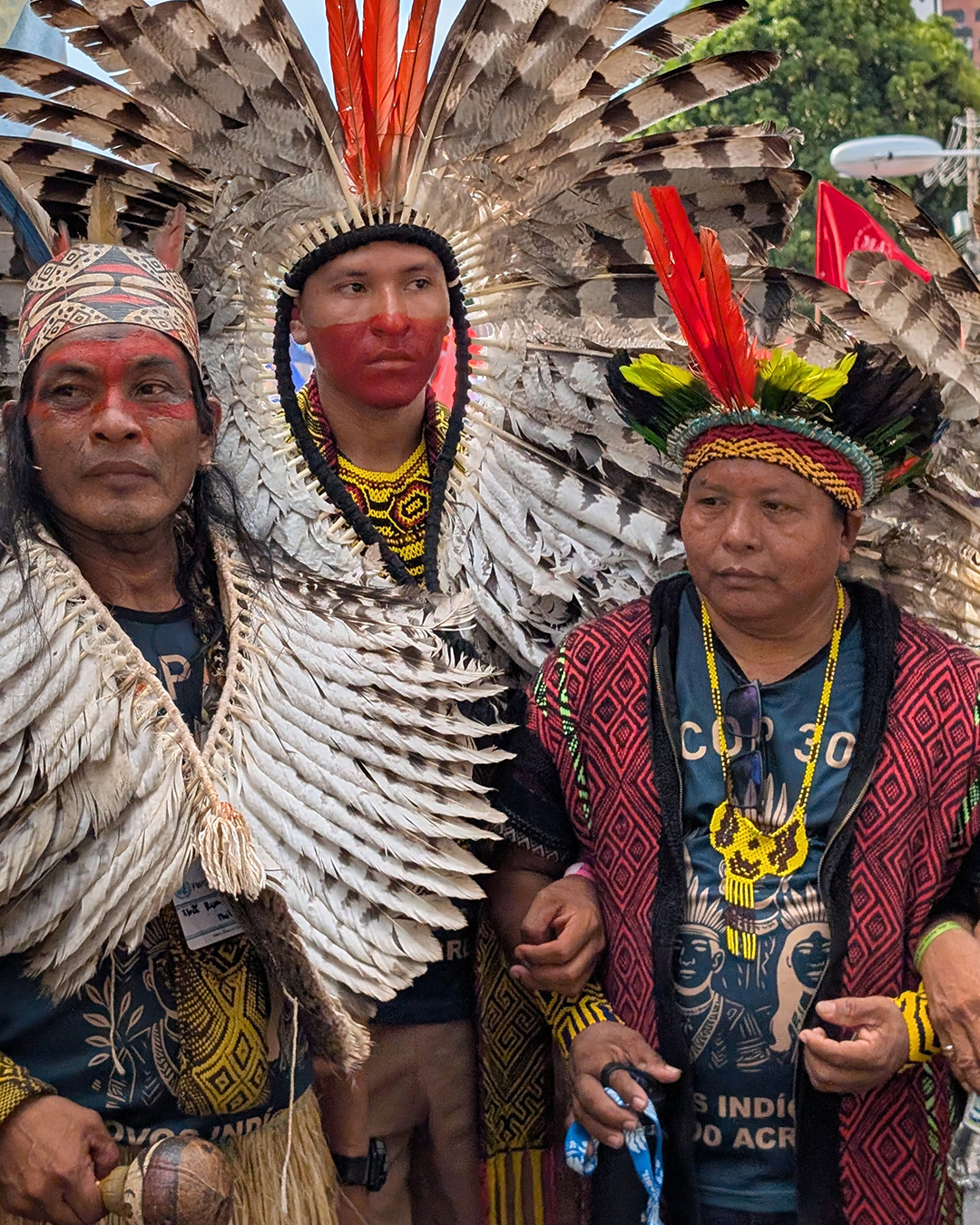
At a time when multilateralism and global governance are under pressure, COP30 marked the return of the Conference to a democratic host and proved to be an exceptionally vibrant event, both in its official spaces and throughout the city of Belém. The People’s Summit (‘Cúpula dos Povos’) brought together about 25,000 participants from across regions for five days of plenaries, debates and collective action. The presence of nearly 3,000 Indigenous representatives was particularly significant, adding depth and urgency to the discussions. Meanwhile, the Global Climate March turned the streets of Belém, in the heart of the Amazon, into a powerful stage for climate advocacy.
At the same time, at the formal, multilateral level, COP faced very relevant political challenges. We followed the negotiations in close coordination with partners, especially through strategic alliances, the Women and Gender Constituency, the Human Rights and Climate Change Working Group, and the Latin American and Caribbean Network for a Sustainable Financial System (REDFIS). Delegates were in charge of negotiating and delivering on a myriad of issues ranging from just transition, gender, adaptation, mitigation, to financing, among many others. Additionally, there were issues added to the debate outside of the official agenda, many of which presented contentious positions among the different States parties. The newly added topics included unilateral trade measures, phasing out fossil fuels and climate financing, which were set to appear in a ‘cover decision’: a decision not tied to any specific agenda item that is drafted without a mandate. This year, the cover decision was named the ‘Mutirão Decision’.
The Mutirão Decision represented an ambitious and pragmatic attempt to create space for highly contentious issues that could easily block progress within the existing processes on the working agenda. By extracting these complex topics from agenda items, the approach sought to prevent procedural delays that have, over the years, stalled progress. However, this separation ultimately came at a cost. By sidelining these critical issues that required strong commitments into a separate track, the Mutirão prevented them from being addressed in other negotiation tracks, while producing notably weak outcomes within the decision itself. The biggest wins, in this context, came in topics that were not part of the Mutirão negotiation, such as Just Transitions and Gender.
The Mutirão Decision was particularly weak because it failed to address the phase-out of fossil fuels and adopt a pathway towards 1.5°C. In addition to that, by extracting this issue from other negotiation tracks, it meant that no decision addresses fossil fuels decisively. However, against the lack of consensus from the plenary of the Conference, a group of 24 countries, led by Colombia, agreed to work to phase out oil, gas and coal outside of the scope of the UNFCCC and invited States to participate at the First International Conference on Fossil Fuel Phaseout, set to take place in Santa Marta, Colombia, in April 2026.
The decision was also inadequate on financing issues. Although procedurally this was a challenge, there was an expectation for COP 30 to find channels to address the shortcomings of the New Collective Quantified Goal established in Azerbaijan the previous year through more ambitious climate finance proposals. Published a few days before the beginning of the Conference, the ‘Baku to Belem Roadmap Towards 1.3 Trillion’ was a well-intentioned effort by Brazil and Azerbaijan, but insufficient to effectively scale up climate finance commitments. The Mutirão decision raised new hopes but merely established a two-year programme on climate finance where States will analyse how to implement Article 9.1, with no substantive commitments. Regarding Adaptation Finance, the outcome was bittersweet; although it included a mention to tripling finance to 120 billion USD, a strong demand from developing countries, it also did so in an excessively vague way and not as a commitment, and postponed the deadline for achieving this from 2030 to 2035 without defining a baseline year.
Climate Finance
The ‘Baku to Belem Roadmap Towards 1.3 Trillion’ was insufficient to effectively scale up climate finance commitments due to its lack of binding potential, stakeholder engagement and overall ownership by the wider international community.
Against this background, the inclusion of Article 9.1 of the Paris Agreement (which establishes that developed countries shall provide financial resources to assist developing countries with respect to both mitigation and adaptation) into the Mutirão agenda in the initial days of COP30 sounded like a promising opportunity. However, shortcomings in inter-ministerial coordination and an overall absence of political incentives towards achieving ambitious financing compromises led to an insufficient outcome, merely establishing a two-year programme on climate finance where States will analyse how to implement Article 9.1, with no specific reference baseline nor substantive commitments.
As for climate finance discussions connected to specific negotiation tracks, the demand to triple adaptation finance by 2035 (a core discussion pushed by the Global South and civil society within the Mutirão Decision) was mentioned in the Multirão decision, but confronted with lack of political ambition by the Global North, resulting in vague and weakened commitments, with merely a ‘call for efforts’ to achieve such outcome and an 'urge' to developed countries to 'increase the trajectory of their collective provision of climate finance for adaptation' in benefit to the developing world.
Just Transition
The most significant wins of this year were around the negotiations on just transition, particularly through the Just Transition Work Programme. Two main outcomes can be highlighted in the decision that emerged from this negotiation. On the one hand, parties agreed to ‘recognise’ specific guidance on just transition; on the other, they have committed to developing a new institutional arrangement to continue and strengthen this work.
The adopted decision includes critical principles to guide just transition pathways. These encompass the recognition that just transition pathways must respect, promote and fulfil all human rights and labour rights, the right to a clean, healthy and sustainable environment, the right to health, the rights of Indigenous Peoples (including their right to free, prior and informed consent and self-determination), people of African descent, local communities, migrants, children, persons with disabilities and people in vulnerable situations, as well as gender equality and women's empowerment. The principles acknowledge the centrality of the care economy, often undervalued and disproportionately carried out by women, as a fundamental component of just transitions, alongside provisions for social protection systems. The text also emphasises the importance of facilitating universal access to clean, reliable, affordable and sustainable energy for all, and recognises the need to avoid exacerbating debt burdens and create fiscal space for countries.
Parties agreed to develop a mechanism, popularised as the Belém Action Mechanism (BAM) within the Conference. One of the main advocacy goals that GI-ESCR had set for this edition, the BAM was conceived within civil society. It will provide concrete guidance and support to countries transitioning to low-carbon economies, monitoring the implementation of just transition commitments and obligations by member States. No COP decision has ever carried such ambitious and comprehensive language on rights and inclusion. While this represents a major victory and demonstrates that more ambitious climate action is possible when social justice is centred, it is necessary to continue working on the development of a strong BAM. Civil society must secure a seat at the table within the BAM to guarantee that just transitions are indeed participatory and make sure that the adopted structure is effective to achieve its goals.
The results of these negotiations are what we were hoping to see in Belém, as we anticipated in our position paper; these are important and concrete steps to guarantee that transitions must be grounded in human rights, gender equality, participation and universal access to sustainable energy.
Beyond the substantive shortcomings and wins achieved this year, the negotiation process itself repeated some of the difficulties that are usually observed in this space, such as the lack of transparency and procedural integrity, and presented a few additional problems. Negotiating texts took days to be released, leaving civil society observers struggling to follow developments and provide timely input, while most of the negotiations took place behind closed doors. Key decisions were gavelled through in the plenary despite vocal objections from multiple parties, undermining the consensus-based decision-making process that is fundamental to the UNFCCC. These procedural failures highlight the urgent need for reforms to ensure that future COPs uphold principles of inclusivity, transparency and meaningful participation in climate decision-making.
Watch Maggie Rochi's intervention as representative of the Women and Gender Constituency on Gender-Responsive Just Transition here.
Gender Justice
At the heart of gender negotiations at COP30 was the renewal of the Gender Action Plan, a critical framework for integrating gender equality into climate policy and action. These negotiations were critical since they would decide on gender-responsive climate efforts for the coming decade.
After intense negotiations, COP30 adopted a new Belém Gender Action Plan (GAP) for the next decade; a hard-won outcome that provides crucial tools for advancing gender-transformative climate action. The GAP secures significant victories, including explicit references to health, care and violence against women, safeguards for frontline communities, provisions for gender and age disaggregated data throughout implementation and the recognition of marginalised groups whose power for climate action has long been ignored, in particular, women environmental defenders. At the same time, important gaps remain; most notably the lack of an adequate intersectionality framework, the absence of gender-diverse people in the language, no direct finance included and the removal of human rights language present in earlier drafts.
The GAP negotiations demonstrated that advances in gender equality are becoming increasingly contested and that parties remain reticent to accept human rights language within climate decisions. Efforts by some States to backtrack on the progress of advancing a gender and intersectional approach to climate policy (through, for instance, proposals to adopt a binary gender definition or eliminate women defenders from the text) highlight the ongoing struggle required to protect and expand gender justice. In any case, the adopted GAP provides substantial avenues to deepen analysis and action over the coming decade. The framework offers multiple entry points for comprehensive gender-responsive climate action, and the feminist movements within and outside the negotiations are well-positioned to build on these foundations and continue pushing to address the remaining gaps in future COPs.
Inside COP30: Actions, Panels and Collective Advocacy
Besides being a formal multilateral process, the COPs of UNFCCC are also a vibrant convening space that gathers almost every sector of society. This includes social movements and civil society organisations, but also private actors, subnational governments, academic institutions, and the international press. It must be stressed that the outcomes of these conferences can go far beyond the formal outcomes; these are incredibly valuable opportunities for exchange, learning, debate, establishing connections and strategising on how to achieve the transformations we need.
We organised and participated jointly with partners in a series of events and spaces to advance a human approach to climate finance and advance a just transition centred on the needs of people and the planet.
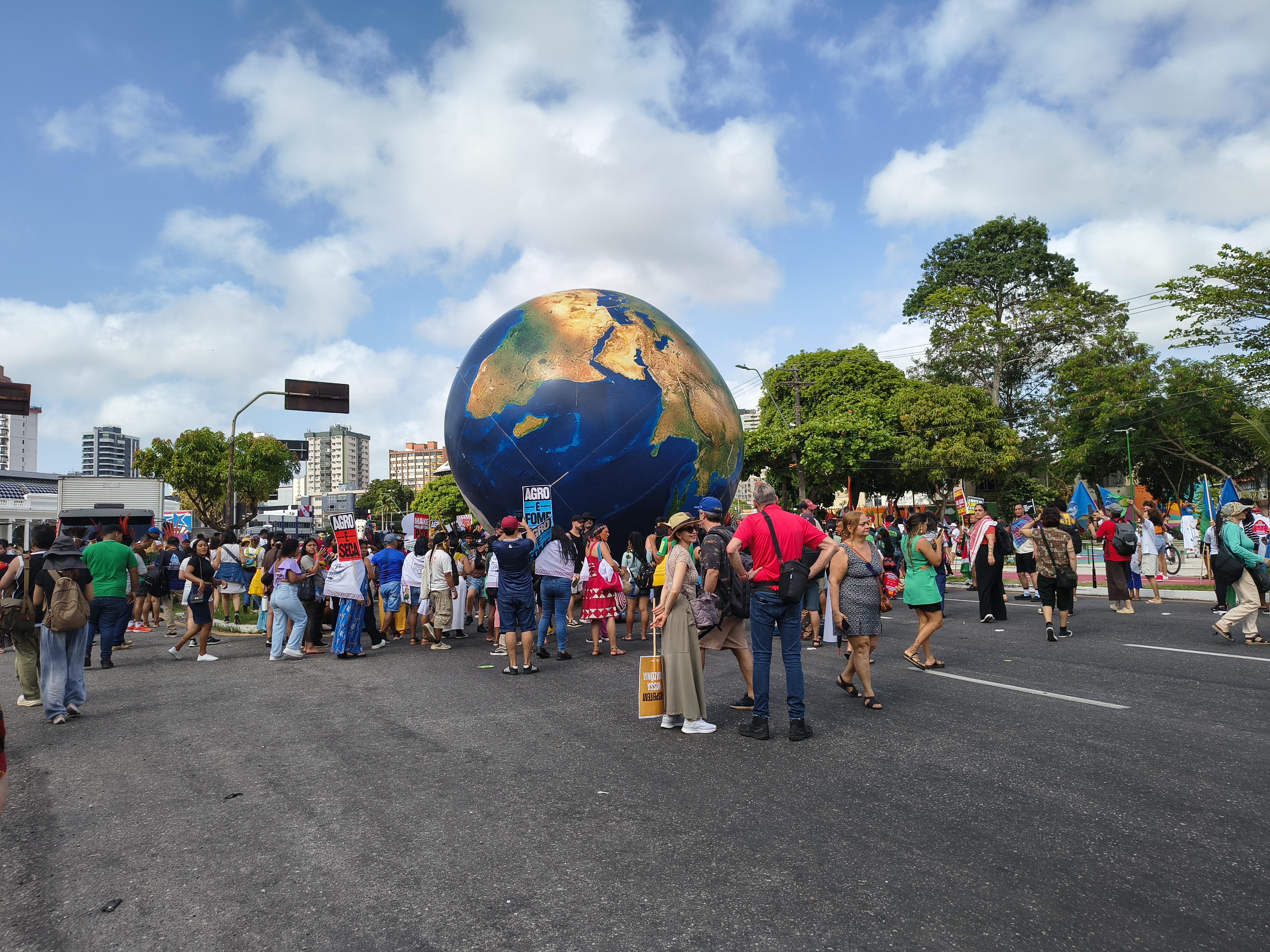
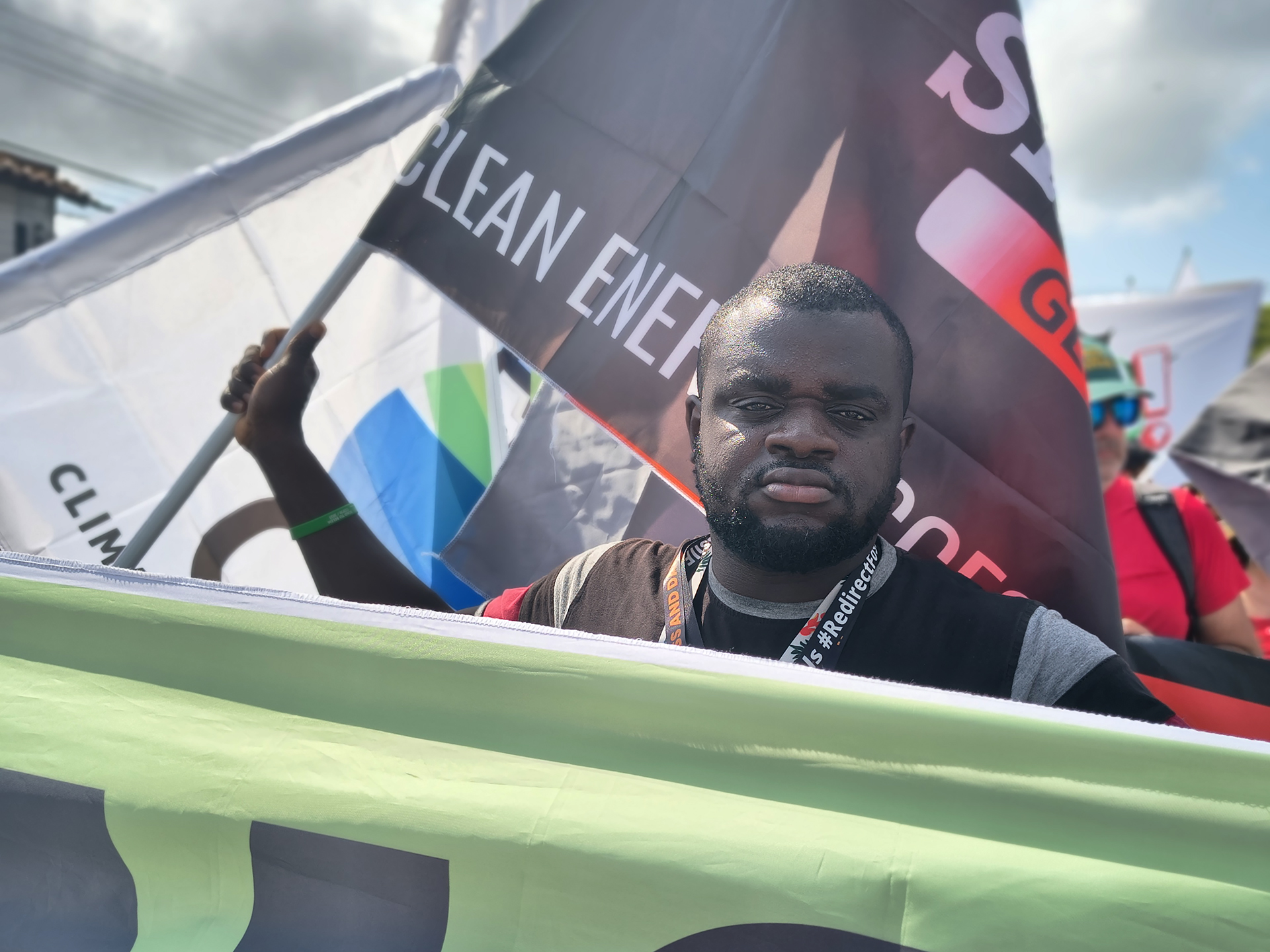
During the two weeks of the Conference marked by its return to a democratic host, we joined multiple actions within the Blue Zone and participated in the Peoples' Summit March, which demanded climate justice and mobilised 70,000 people from global and Brazilian movements as part of a worldwide Global Day of Action, with over 100 marches held across 27 countries. The action condemned global economic inequality, environmental racism, and corporate impunity that have delayed climate action and denied justice to climate-vulnerable countries.
 |
 |
 |
 |
 |
 |
Side Event: Towards and Beyond $1.3 Trillion: Innovative Solutions to Address the Finance Gap
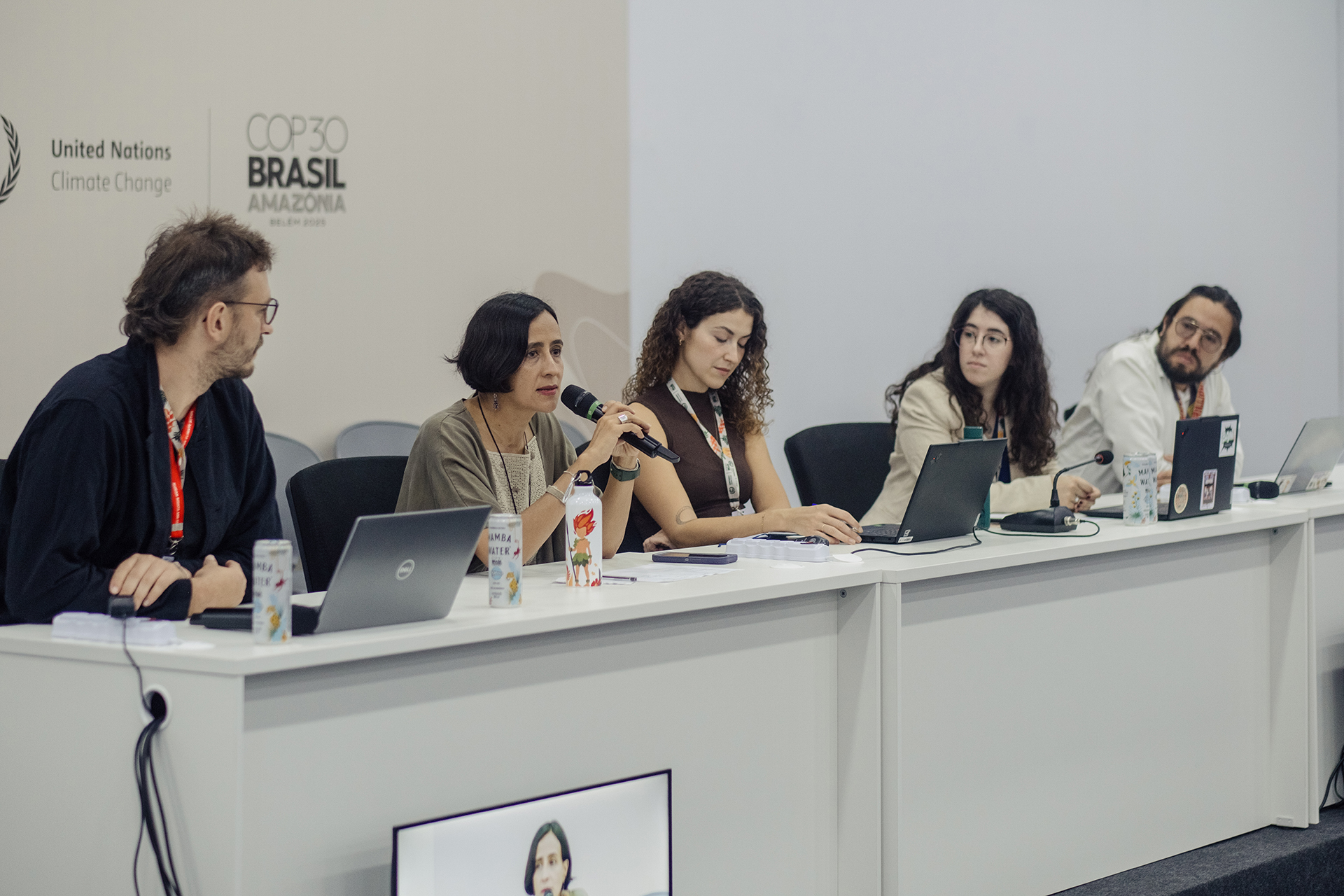
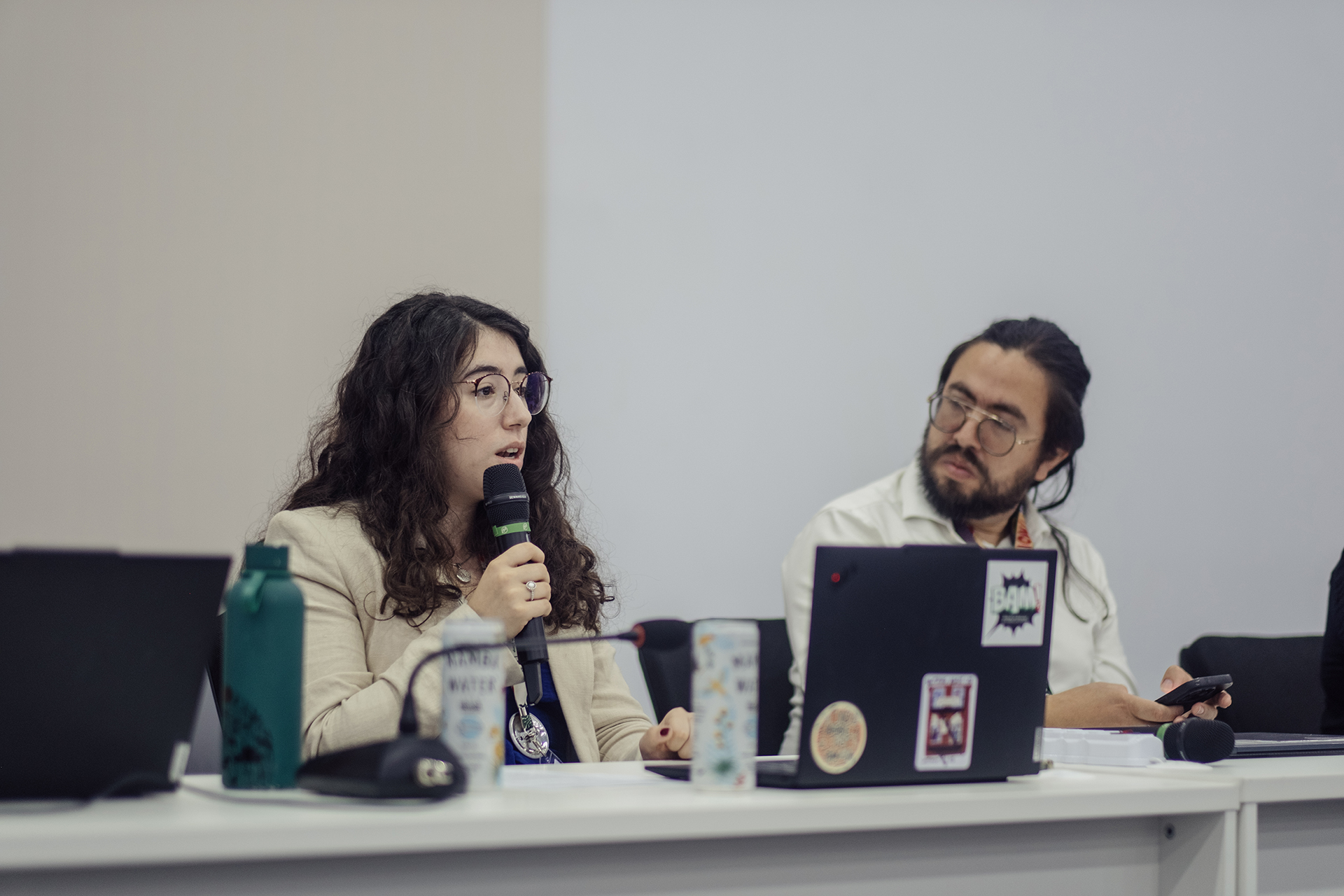
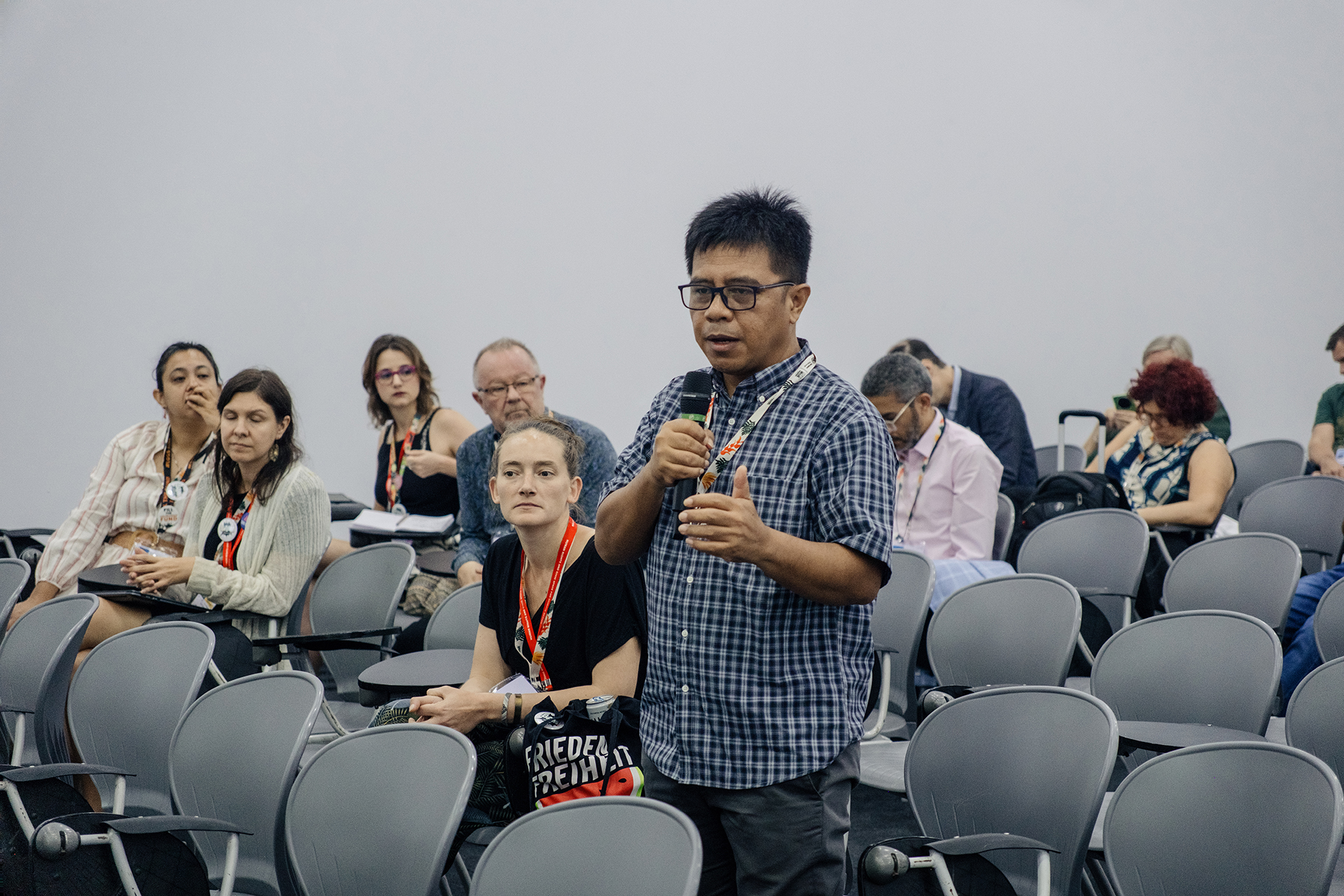
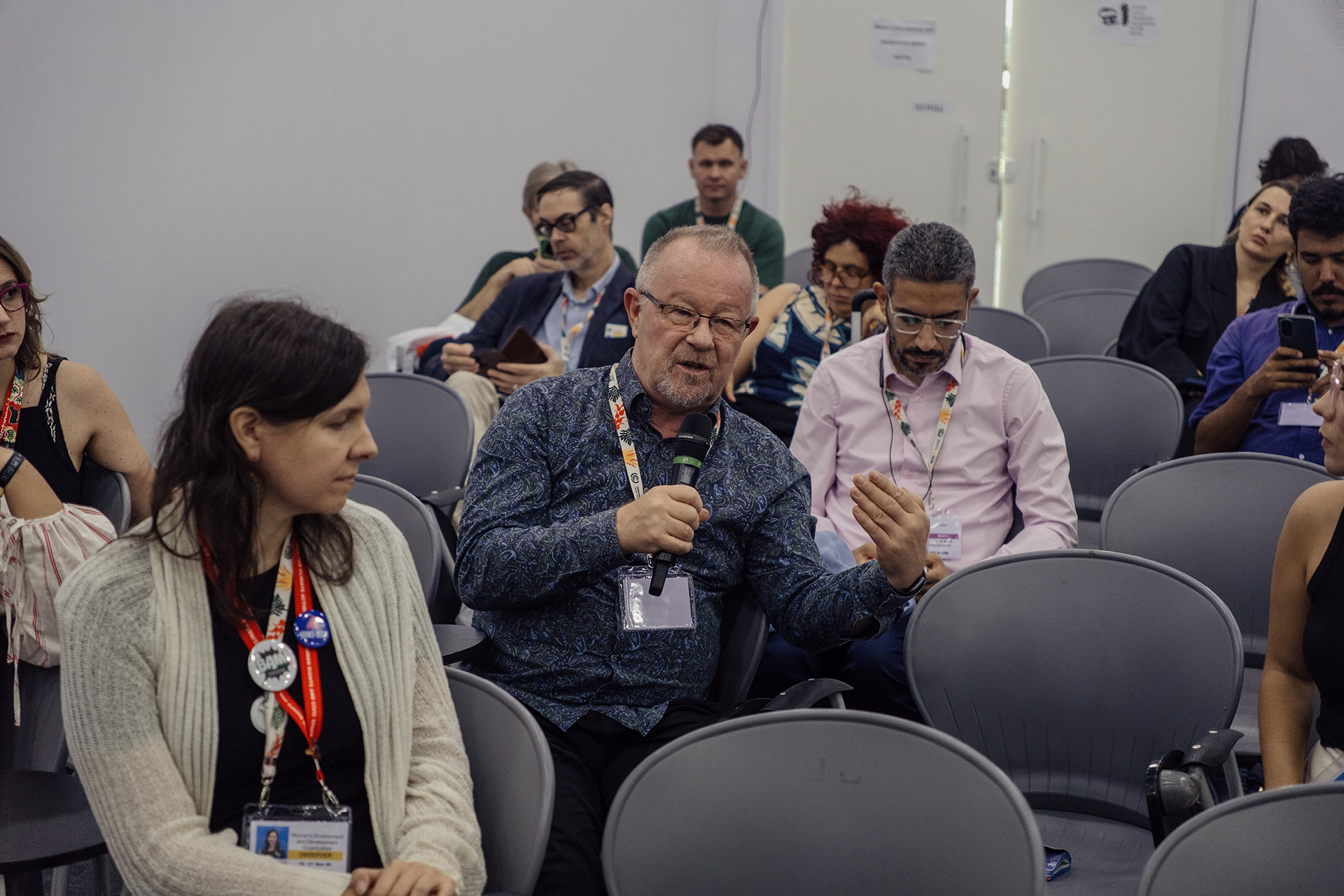
On 20 November, we co-hosted, together with the Rosa Luxembourg Foundation and the support of the Climate Finance Group of Latin America and the Caribbean (GFLAC, for its name in Spanish), Tax Justice Network and Dejusticia, a side event examining pathways to bridge the critical climate finance gap and analysing the then ongoing negotiations taking place. The event was designed around a central premise: that the fragmentation of international diplomacy across climate, tax, and human rights forums undermines the collective response precisely when integrated solutions are most needed. We aimed to bring together civil society, experts and representatives to identify and explore potential pathways to close the financing gap, moving beyond the inadequate USD 300 billion annual commitment secured at COP29 toward the minimum USD 1.3 trillion per year demanded by developing countries. In particular, it was explored how international tax cooperation, particularly through the UN Framework Convention on International Tax Cooperation, could serve as a key source of funds, calling for integrated solutions capable of achieving the scale of finance needed to enable just transitions.
The panel featured critical interventions from multiple perspectives and was moderated by David Williams, Director of the International Climate Justice Programme at the Rosa-Luxemburg-Stiftung. Moreover, Susana Muhamad, former Minister of Environment and Sustainable Development of Colombia, highlighted the critical need to urgently address the climate finance gap and stressed that 1.5°C is not a goal, but rather a planetary limit. Our Programme Officer on Climate and Environmental Justice, Rochi, reframed climate finance as a binding legal obligation under international law rather than voluntary charity, drawing on the recent International Court of Justice Advisory Opinion and human rights frameworks. Sandra Guzmán from GFLAC provided an up-to-date overview and analysis of the then-ongoing climate finance negotiations, while Sergio Chaparro Hernández from Tax Justice Network and Dejusticia connected tax justice to climate justice, demonstrating why the UN Tax Convention is essential for addressing the finance gap. Finally, Ilaria Crotti from UNCTAD addressed the broader reform of the International Financial Architecture. In his role as moderator of the panel, David Williams emphasised the need for higher finance ambition and noted that achieving the scale of finance needed for just transitions requires transcending traditional diplomatic silos.
 |
 |
 |
 |
Climate and Care
On 14 November, we co-hosted the side event ‘Care, Climate and Just Transition’ with UNRISD, UN Women, UNCTAD, WEDO, Fundación AVINA and the IDRC, exploring the critical links between climate change and care work to inform pathways toward a just transition. The event examined how climate change increases and intensifies care work, exacerbating existing gender, economic and geopolitical inequalities, while simultaneously highlighting how caring responsibilities, including social infrastructure activities and caring for food, water and biodiversity, are critical to collective well-being in the face of the climate crisis. Speakers, including representatives from the Women and Gender Constituency, Public Services International, the African Group of Negotiators, and government representatives from Australia and Cambodia, discussed how many just transition strategies focus narrowly on formal industrial jobs in energy, manufacturing and transport sectors with limited attention to care work, informal workers and social infrastructure. The event proposed policy directions to integrate care into just transition frameworks, emphasising that without considering the care dimensions of climate action, policies risk recreating and deepening existing inequalities.
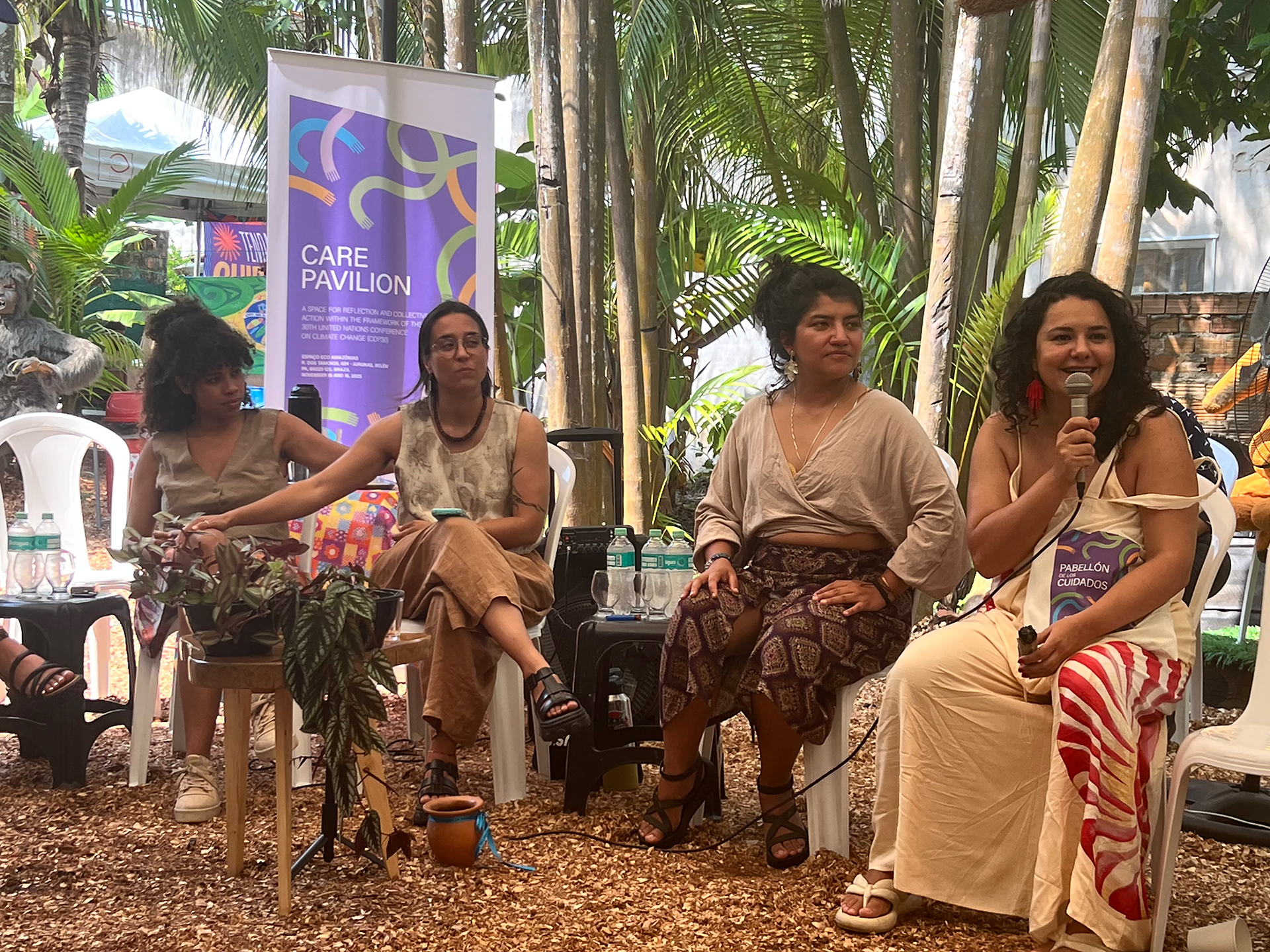
Moreover, as an active member of the Global Alliance for Care (GAC), we also participated on 15 and 16 November in the activities of the Care Pavilion, a shared space highlighting the central role of care in sustainable development and its intrinsic connection to climate change and just transitions. We were there to support our partners from the GAC, the Care and Climate Initiative, Fundación Avina, the IDRC and Instituto Procomum and advance the care agenda within climate negotiations, elevating care as a foundational element of climate policy.
 |
Beyond the Pavilion, we actively advocated within the negotiations to mainstream the relevance of care across climate policy frameworks. GI-ESCR helped draft, with partners such as Instituto Procomum, an open letter that was delivered on 20 November to the COP30 Presidency, urging that care be treated as a central pillar of just transition and climate policy, and setting out concrete demands. We called on COP30 to integrate the four dimensions of the human right to care into strategies on just transition, decent work and adaptation; to recognise care systems and universal public services as essential climate infrastructure; to ensure meaningful participation of unpaid carers and care workers in climate decision-making; and to place care at the core of the new Gender Action Plan and of loss-and-damage and reparations policies.
The new Belém Gender Action Plan and the decision within the Just Transition Programme both recognised care work for the first time. These are historic steps and require political commitment so that these translate into financing, the consolidation of universal, quality public services, capacity building, and the effective participation of unpaid women carers and women workers in climate and economic decision-making, to achieve a truly just transition.
Side Event: Aligning Climate Action With Human Rights Obligations Including to Cooperate and Mobilise Resources
On 12 November, we participated in a side event organised by the Office of the United Nations High Commissioner for Human Rights (OHCHR), alongside ECLAC, ILO, IOM, UNDP, UNEP, UNEP-FI, UNFPA, UN Women and WHO, focused on aligning COP30 outcomes with States’ human rights obligations. Our Programme Officer on Climate and Environmental Justice, Maggie Rochi, spoke as a representative of the Women and Gender Constituency on ensuring gender-responsive approaches to just transition. The intervention highlighted how the climate emergency disproportionately impacts women, particularly Indigenous women, women of colour, and women in the Global South, and emphasised that just transitions require a fundamental transformation of energy systems, not merely a technical shift between energy sources. Maggie stressed that just transitions must be understood holistically, encompassing both mitigation and adaptation while addressing the structural conditions of gender inequality, and called for the establishment of a robust Belem Action Mechanism capable of guiding countries toward sustainable societies that prioritise the well-being of people and planet, ensuring a rapid and equitable phase-out of fossil fuels without leaving anyone behind.
Side Event: Securing Ambitious COP Outcomes and Future Finance for Climate Justice
On 11 November, we were invited to participate in a side-event organised by Oxfam International, the End Austerity Campaign and 350.org, exploring potential pathways to secure ambitious financing outcomes during UNFCCC discussions and through parallel processes. Our Programme Officer on Economic Justice and Climate Finance, Ezequiel Steuermann, joined a high-level panel discussion including Amitabh Behar, Executive Director of Oxfam International; Agnes Callamard, Secretary General of Amnesty International; Kumi Naidoo, President of the Fossil Fuel Non-Proliferation Treaty Initiative; Fanny Petitbon, France Team Lead at 350.org; and frontline activists Luti Guedes (Brazil) and Grace Mallie (Tuvalu). Ezequiel highlighted that tackling the climate crisis requires putting inequality and justice at the centre and linking climate negotiations with international tax reform, particularly the proposed UN tax convention. He argued that connecting UNFCCC outcomes to efforts to curb global tax abuse -which costs states an estimated USD 492 billion a year– is essential to channel new revenues towards meeting the New Collective Quantified Goal and mobilising USD 1.3 trillion annually, as set out in the Baku to Belem Roadmap.
Protecting the Right to Protest at COP30
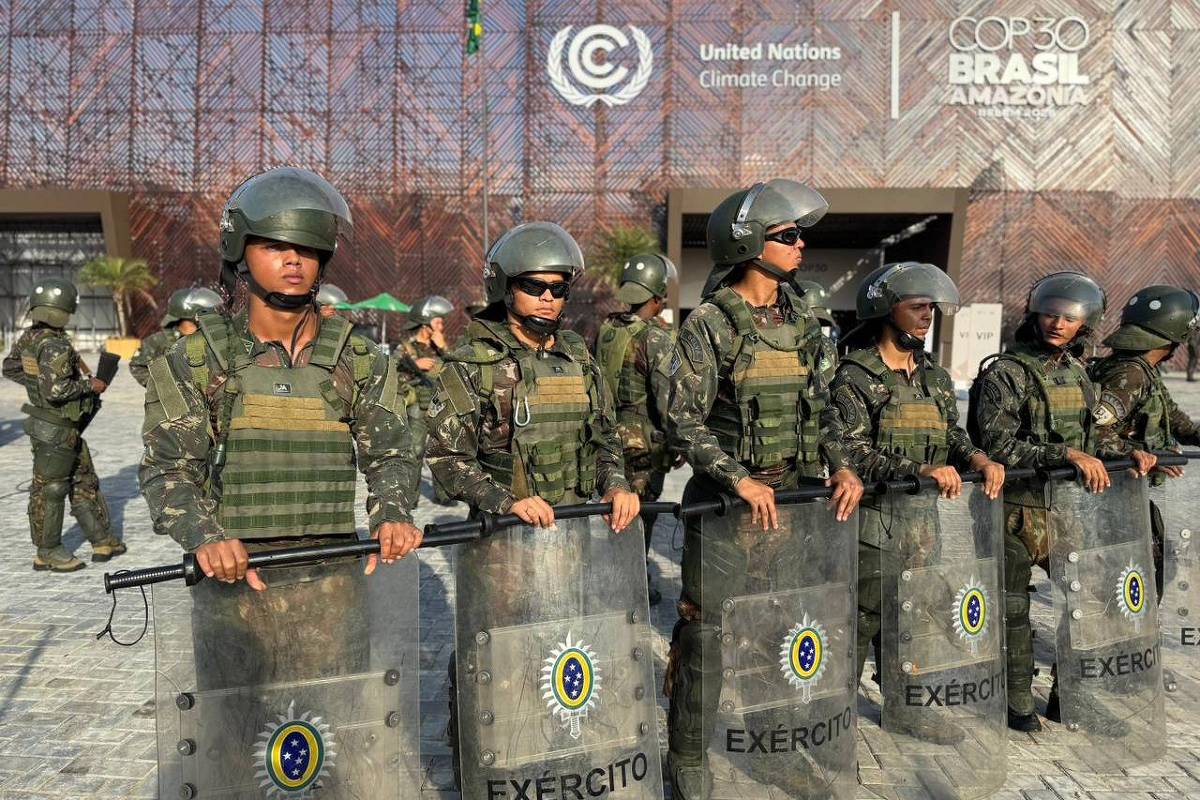
At the end of the first week of COP30, the UNFCCC Executive Secretary, Simon Stiell, sent a communication to the Brazilian presidency calling on them to increase security presence and intervention to disperse protests, following a demonstration by indigenous peoples and other movements that took place at the entrance of the Blue Zone, which posed no serious risk. As a direct consequence, since Saturday and throughout the rest of the Conference ostensive military presence was established at the entrance, which had a clear dissuasive effect and prevented the exercise of the right to freedom of expression. As a response, together with the Human Rights and Climate Change Working Group, we drafted and sent an urgent letter to the UNFCCC secretariat expressing grave concern over its communication to the Brazilian government, calling on the Executive Secretary to safeguard human rights in all of its work, in particular through its host country agreements to protect freedom of expression, assembly and association.
 |
Related Articles
SITEMAP
TAKE ACTION
NEWSLETTER
