

Accessibility Tools

Select your language

25th of the UN Human Rights Council

25th of the UN Human Rights Council

ESC Rights Update from Geneva: 25th of the UN Human Rights Council, Spring 2014


Spring 2014

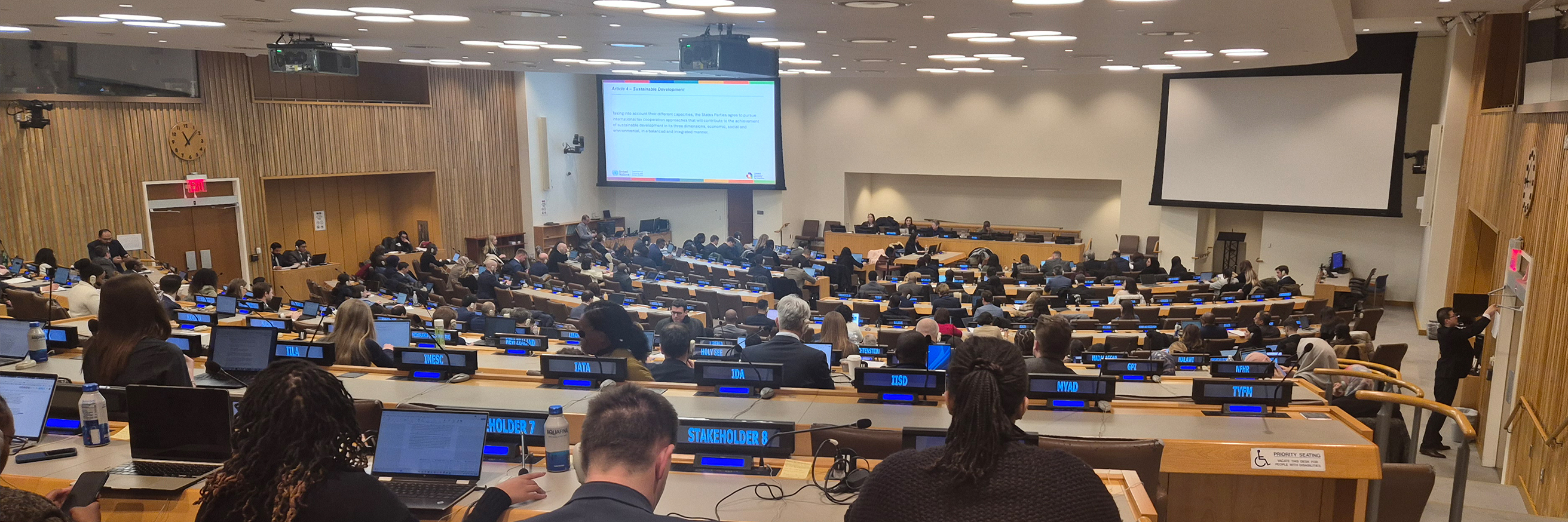
Economic, social and cultural (ESC) rights were well represented at the 25th session of the Human Rights Council in March.  There were at least 5 resolutions directly dealing with ESC rights, on: economic, social and cultural rights; food; housing; cultural rights, and environment.  Experts in relation to three of those rights also reported to the Council during this session, namely the: Special Rapporteur on adequate housing as a component of the right to an adequate standard of living; Special Rapporteur on the right to food; and Independent Expert on the issue of human rights obligations relating to the enjoyment of a safe, clean, healthy and sustainable environment .[1]  Whilst the Council was scheduled to appoint new mandate holders for the Special Rapporteurs on Adequate Housing and Food (and others), the appointments were postponed pending further negotiations amongst States.  It is believed that some States were unhappy with the geographical spread of candidates nominated by the President.

Below is a summary of the activity relating to ESC rights generally, the right to food and the right to adequate housing at the 25th session of the UN Human Rights Council.

Economic, Social and Cultural Rights

The ESC rights resolution was again led by Portugal and was adopted without a vote[2] after some last minute amendments.  The omnibus resolution entitled ‘Question of the realisation in all countries of economic, social and cultural rights’[3] again called on States to sign and ratify the ICESCR and whilst it ‘welcomed’ the entry into force of the Optional Protocol, the use of weak language, calling on States to ‘consider’ signing the OP was disappointing.  The resolution also acknowledged the Secretary-General’s report on access to justice[4] and ESC rights and requested the Secretary-General to prepare a further report for 2015, this time focusing on social protection floors.

The resolution contained new language on access to effective remedies and referred to the joint UN Social Protection Floor Initiative and ILO recommendation 202 (2012) on that topic. The resolution also included new language on the post-2015 development agenda focusing States’ attention on some of the specific areas in which the human rights framework can strengthen the MDGs post-2015: ‘Underlining the imperative need to accelerate efforts towards the achievement of the Millennium Development Goals, and recognizing the crucial importance of giving due consideration to the realization of [ESCRs] in the elaboration of the post-2015 development agenda’ and ‘to equality, social protection and accountability’.

Continuing with its outlier role vis-à-vis ESC rights, the US was the only State to explain its position in relation to this resolution.  Not being a party to the ICESCR, the US pointed out that by joining consensus on this resolution it does not become bound by the Covenant. The US also ‘regretted’ reference to the ‘right to development’ which it says does not have an international understanding and which the US does not consider a human right in the legal sense. Finally, the US noted its view that the Human Rights Council is not the agreed venue for reaching consensus on the post-2105 development agenda and ‘nothing in the resolution should be construed as pre-determining’ it.

Right to Adequate Housing

The Special Rapporteur on the right to adequate housing, Raquel Rolnik, presented her final report[5] to the Council and engaged in an Interactive Dialogue, together with the Special Rapporteur on the right to food.  Her report focused on security of tenure and presented 10 Guiding Principles on Security of Tenure for the urban poor.  The report noted that globally, tenure insecurity was responsible for many millions of people living under daily threat of eviction, lack of access to services, or discrimination by public and private actors, and that the poorest bear the brunt of tenure insecurity.  She emphasized that tenure rights extend beyond mainstream notions of private ownership and include multiple tenure forms including collective models.

The Report also included the Rapporteur’s two country reports for 2013: the United Kingdom and Indonesia.  Following a controversial country mission to the UK last year, the UK Ambassador in her oral statement pointed out the UK’s disagreements with the Special Rapporteur’s report and that they do not consider the Guiding Principles on Security of Tenure to be appropriate for the UK.

In the Interactive Dialogue with the Special Rapporteur, State interventions were generally positive and supported the Guiding Principles on Security of Tenure.  The co-sponsors, Germany and Finland emphasized non-discrimination and the particular vulnerability of women to insecure tenure and the differential adverse impact on women. A couple of States pointed out the role played by non-State and business actors in protecting security of tenure.

After a break of two years since the last resolution on adequate housing, Germany and Finland, put forward a strong draft resolution, including new language on security of tenure.  The resolution was adopted without a vote after being orally revised[6].  The final text was slightly weakened (compared with the original draft) although retained many strong provisions which advanced the Council’s pronouncements on this right.  The resolution extended the mandate of the Special Rapporteur for a further 3 years and added a clause recalling the Code of Conduct for Special Procedures Mandate Holders and stressing compliance.[7]

New language expressed concern about: the numbers of people living in unserviced and unplanned urban poor settlements and their vulnerability to disease, disasters, unemployment and lack of education; the number of foreclosures in recent years and the inadequate protections for tenants in private rental; and the disproportionate impact of the deterioration in the general housing situation on a number of groups.  Further, new language recognized the importance of security of tenure and the need to promote a variety of tenure forms in urban development, land management and land administration.

It was pleasing to see the post-2015 development agenda also received attention for the first time in this resolution which called on States to ‘give due consideration’ to the right to adequate housing in the elaboration of the post-2015 development agenda.

Finally, new language was introduced which strengthened the call on States to cooperate with the Special Rapporteur by calling for ‘constructive dialogue’ in relation to follow-up and implementation of her or his recommendations.

In negotiations, South Africa, Egypt, the US and the GRULAC States played a vocal role.  There were anecdotal reports that the negotiations for this resolution were difficult.  Many were disappointed in particular by the retrogressive stance taken by South Africa on this and other resolutions before the Council this session.  In particular, a number of NGOs, including South African NGOs, commented on South Africa’s contribution in its first Council session since it became a member[8] and given its strong domestic protection of ESC rights.

Again, the US was the only State to provide an explanation of its position and it was very similar to that provided in relation to the ESC rights resolution.  In addition, the US stated that it read references to ‘non-discrimination’ as referring to the defined term in international law, and, wrongly, that security of tenure is not a human right, nor it is an element of the right to adequate housing in international law.

Right to Food

The Special Rapporteur on the right to food, Olivier De Schutter, presented to the Council his final report entitled ‘The Transformative Potential of the Right to Food’[9], including reports on his country visits to Malaysia and Malawi.  The culmination of his six years work as Special Rapporteur, the report summarizes his previous recommendations, provides his diagnosis of the problems in fulfilling the right to food for all and proposes a new paradigm and way forward which involves a radical and democratic redesign of food systems.  De Schutter advocates the movement away from a system that prioritizes efficiency and increased production, to one that pays attention to distribution, food sovereignty, support of small-scale producers, adequate nutrition and ecological sustainability.  He emphasizes the need for monitoring and accountability mechanisms and participatory policy-making and for an international enabling environment which means reform by the North particularly in relation to international trade and agricultural policies.

In the Clustered Interactive Dialogue with the Special Rapporteurs, many States took the floor to comment on De Schutter’s report and term as mandate holder.  Comments were generally positive and supportive.  Many pointed out the importance of food sovereignty and supporting small-scale producers and a number of countries also emphasized the central role of women in food security and that empowering women was a necessary precursor to eradicating hunger.  Many countries of the Global South were eager to underscore the critical importance of an enabling international environment and in particular a shift in international trade and agricultural policies. These comments should be seen in the context of the December 2013 WTO Ministerial Meeting which agreed the ‘Bali package’ including a controversial ‘peace clause’ relating to developing country public stockholding programs for food security - a result widely seen as evidence that, unfortunately, free trade is still viewed by some as trumping the right to food.

The resolution on the right to food, led again by Cuba, was also adopted without a vote after oral revisions.[10]  Despite efforts by some States to push for the ‘stream-lining’ of resolutions, the resolution remains 8 pages and 51 operative paragraphs in length.

The resolution extends the mandate of the Special Rapporteur for a further 3 years.  It contains only a small amount of new language. Importantly, a definition of the right to food[11] was introduced in the preambular paragraphs. Some new language links work by the Human Rights Council with the UN Conference on Sustainable Development and that of the Committee on World Food Security which is developing voluntary and non-binding principles for responsible agricultural investments and refers to the 2013 FAO Report ‘The State of Food Insecurity in the World 2013’. Additional new language is also introduced relating to international cooperation support for adapted technologies, ‘research on rural advisory services’, ‘access to financing services’ and the ‘establishment of secure land tenure systems’ and also highlighting the need to facilitate access of small-scale food producers, to national and international markets and their empowerment in value chains.

The EU raised its on-going concern about the ‘causal linkage proposed in [OP15] between … current distortions in the agricultural trading system’ and ‘local producers and poor farmers to compete and sell their products’ which it says is a simplification and does not take account of the complexity of issues relating to food security.

The next session of the Council, in June 2014, will again consider ESC rights and the GI-ESCR will have a forthcoming update on those developments.


3 April 2014 Lucy McKernan

UN Liaison This email address is being protected from spambots. You need JavaScript enabled to view it. Global Initiative for Economic, Social and Cultural Rights


[1] A/HRC/25/53 and Add.1

[2] And with some 62 co-sponsors, although the co-sponsorship list had not closed at date of publication.

[3] A/HRC/25/L.16

[4] A/HRC/25/31

[5] A/HRC/25/54, Add.1–2 and Add. 4

[6] A/HRC/25/L.18/Rev.1 – co-sponsored by 63 States.

[7] This was one of a number of amendments proposed by Egypt and others, relating to the role of the Special Procedures mandate holders.

[8] See http://seri-sa.org/index.php/38-latest-news/237-press-statement-south-african-delegation-at-the-human-rights-council-may-weaken-the-international-status-of-the-right-to-adequate-housing-27-march-2014

[9] A/HRC/25/57 and Add.1–2

[10] A/HRC/25/L.26

[11] Taken from Committee on Economic, Social and Cultural Rights, General Comment 12

Related Articles

NEWSLETTER

Don´t miss any updates!
Image

Select your language

Social Media:

Log in

Climate and Environmental Justice

We have advanced rights-based and gender-transformative transition frameworks through research that centres the lived experiences of women and marginalised communities on the frontlines of extractive energy policies, promoting climate and energy frameworks attentive to the social and care-related impacts of transition pathways. We have developed a clear vision for a gender-just transition, firmly rooted in gender and human rights norms, establishing both the legal basis and the direction for the transformative changes our planet and societies urgently need. In particular, the ‘Guiding Principles for Gender Equality and Human Rights in the Energy Transition’, a collective effort built through online consultations, an in-person workshop and multiple rounds of revision with activists, practitioners and experts from around the world, outline a transformative vision for reshaping global energy systems through a human rights and gender equality lens.

Our work recognises that the climate emergency is both an existential threat and an opportunity to reimagine societies built on social, gender, economic and environmental justice. We ground our advocacy in feminist and intersectional principles, prioritising the agency and perspectives of communities in the Global South who have contributed the least to the climate emergency yet face its most devastating consequences. Central to our approach is the understanding that energy is not merely a commodity but a fundamental human right; essential for dignity, health, education, work and the realisation of countless other rights. We challenge approaches to the energy transition that risk replicating the harmful patterns of fossil fuel extraction and, instead, advocate for transformative policies that ensure human rights and gender equality as central to building climate-resilient societies rooted in dignity, justice and planetary well-being.

What's next?

We will continue to challenge approaches that treat energy transition as merely a technical shift, instead positioning it as an opportunity to reimagine economies and societies rooted in dignity for all, with particular attention to communities in the Global South who have contributed least to the climate emergency yet are most exposed to its worst effects.

We will connect community-level evidence and the lived experiences of those on the frontlines of extractive policies to national reform and global norm-setting, breaking down silos between human rights, gender, and climate movements, and advancing a shared vision that recognises just transitions as not only fundamental to achieving climate-resilient and sustainable societies, but as transformative pathways that advance social and gender equality, redistribute power and resources equitably, and ensure that energy systems serve the public good rather than profit.

We will mainstream rights-based and genderjust transition priorities in key multilateral spaces (particularly, within the Just Transition Work Programme and the to-be-developed Just Transition Mechanism, within the UNFCCC) to guarantee that just transitions are advanced at all levels.

We will also translate our work, through strategic advocacy, into at least two concrete policy wins, whether promoted, adopted, implemented, or scaled, in priority countries (Argentina, Brazil, Chile, Mexico, Colombia, South Africa, or Kenya), ensuring these policies align with human rights standards, centre gender equality, and reflect the needs and views of affected communities.

We will build momentum for the progressive recognition of the right to sustainable energy to shift dominant narratives away from purely extractive solutions that sideline gendered impacts, community participation, and Global South perspectives.

Economic Justice and Climate Finance

Our work has transformed the global discussion on fiscal policy in a more just, emancipatory and sustainable direction. Our approach has combined both high-level, expert contributions within decisionmaking circles, with bold, impactful work on narrative change with the general public.

We have been instrumental in the inclusion of human rights as a guiding principle of the future United Nations Framework Convention on International Tax Cooperation, a multilateral instrument with the potential of raising approx. USD 492 billion per year in public revenues currently foregone to global tax abuse. In the process leading to the ‘Compromiso de Sevilla’ decided at FfD4, we proposed and succeeded in creating a specific human rights workstream within the Civil Society Financing for Development Mechanism, which was critical to ensure that explicit commitments on the matter were included in the negotiating outcome. In a context of cutbacks in multilateral institutions, we have amplified the capacities of technical experts, providing rigorous technical support and leveraging our influence to ensure the enactments of groundbreaking standard-setting instruments, such as the 2025 UN Committee on Economic, Social and Cultural Rights Statement on Fiscal Policy and Human Rights, and the first ex oficio hearing on the Inter-American Commission of Human Rights on Fiscal and Economic Policies to Address Poverty and Structural Inequality, leading to an upcoming thematic resolution on the matter. We have also bridged the silos between multilateral tax discussions and climate finance debates, promoting ambitious financing commitments to increase international and domestic resource mobilisation during COP 28, 29 and 30.

At the regional level, our engagement with fiscal cooperation platforms such as the Platform for Fiscal Cooperation of Latin America and the Caribbean (PTLAC), where we are member of its Civil Society Consultative Council, and the African Anti-IFFs Policy Tracker, for which we participated in the pilot mission in Ivory Coast together with Tax Justice Network Africa (TJNA), have been critical in cementing a growing engagement between tax administrations and ministries of finance with international legal experts, exploring actionable and transformative initiatives, such as the taxation of high-net-worth individuals, beneficial ownership registries and corporate countryby-country reports, to be implemented at the international level.

At the local level, our interventions in fiscal reform debates in Chile, Brazil, Colombia and Nigeria have contributed to shaping legislative outcomes in a more progressive, rights-compliant direction.

As for our leadership in narrative change, we have a measurable track record in delivering tailored, innovative campaigns which have decisively expanded economic justice constituencies by appealing to a broader tent. In Latin America and the Caribbean, we created the ‘Date Cuenta’ campaign, coordinating over 40 organisations across civil society to deliver plain language, innovative messaging connecting progressive fiscal reforms to the financing of health, education and social protection. ‘Date Cuenta’ generated over 55 original campaign messages that were tailored to the realities of seven priority countries (Argentina, Chile, Colombia, Mexico, Paraguay, Peru and Honduras) and disseminated in Spanish, Portuguese and English. In doing so, we convened more than 65 online co-creation workshops with partners, coordinating a unified communications strategy which combined digital outreach, press and media coverage, and collaboration with influencers. Ultimately, ‘Date Cuenta’ resulted in more than 60,000 interactions on social media, coverage in major regional and international media outlets, including El País, Deutsche Welle, Bloomberg and France 24, and the participation of at least 63 social media influencers through 58 dedicated publications. In collaboration with Fundación Gabo and the Friedrich Ebert Stiftung, we also organised a two-day workshop in Bogota with 20 journalists from 13 countries, building a regional network trained in a human rights-based approach to fiscal policy that has since generated published media coverage on outlets such as La Diaria, Ciper, El Diario Ar and Milenio. Through ‘Date Cuenta’ and our regional advocacy, we strengthened civil society engagement in key processes, including the Financing for Development track and FfD4, co-organised highlevel dialogues with states and civil society from Latin America and Africa.

What's next?

We will shape the UN Tax Convention and its Protocols so they embed human rights principles, and we will stay engaged through follow-up processes (including the expected Conference of the Parties) to support effective implementation. We will keep linking tax and climate finance so that new resources mobilised through fiscal cooperation are channelled to adaptation, mitigation, and loss and damage, in line with UNFCCC commitments.

Public Services for Care Societies

We have translated participatory research into accountability and policy outcomes.

In Ivory Coast, our work with Mouvement Ivoirien des Droits Humains and affected communities since 2023 exposed how privatisation and lack of accountability restrict access to quality healthcare. It contributed to the closure of 1,022 illegal private health centres, an executive instrument strengthening the regulation of private hospitals across the country, and the creation of a permanent complaints management committee in healthcare through a bylaw issued by the prefect of Gagnoa. Partners engaged through this process also advanced concrete improvements at facility level: members of the Gagnoa Midwives Association who took part in the participatory action research pooled resources to renovate the neonatal unit of the Regional Hospital, and the Director of the Gagnoa General Hospital launched an action plan to expand services and improve patient reception, with the facility receiving the award for best hospital in the country in 2025.

In Kenya, our research with the Mathare Education Taskforce documented the absence of public schools and the expansion of private provision, evidencing impacts on households and caregivers and strengthening demands for free, quality public education. This work contributed to stronger community agency and collective organisation, alongside ongoing strategies ranging from communications to litigation to secure a public school in the area, some involving GI-ESCR and others led independently.

Across Africa, this work is complemented by a multi-country study examining the human rights implications of austerity in education and health, including how regressive fiscal policies, rising debt burdens and persistent underinvestment undermine the financing and delivery of public services.

In Latin America, from 29 November to 2 December 2021, over a thousand representatives from over one hundred countries, from grassroots movements, advocacy, human rights, and development organisations, feminist movements, trade unions, and other civil society organisations, met in Santiago, Chile, and virtually, to discuss the critical role of public services for our future. Following the meeting, the Santiago Declaration on Public Services was adopted to demand universal access to quality, gender-transformative and equitable public services as the foundation of a fair and just society.

We are currently advancing work on care systems, linking public services and fiscal justice through integrated research, advocacy and communications, including a regional campaign framing care as a collective responsibility requiring sustained public investment.

What's next?

In Ivory Coast, we will evaluate and strengthen the complaints management committee and position it as a replicable model for other health facilities. In Kenya, we will support the Mathare community to co-design a model public school for Mabatini and Ngei wards, grounded in human rights standards. Building on our multi-country austerity study, we will drive national advocacy on financing for education and health: advancing reforms in Ghana; launching a fiscal policy and public services financing agenda in Kenya through the CESCR process and targeted coalition work; and, in Nigeria, using the new tax acts in force since 1 January 2026 to catalyse a national accountability campaign for adequately funded, quality public services. In Latin America, we will amplify locally led care pilots across 8 countries and turn lessons into influence—advancing care policies that strengthen care organisations, protect care workers’ rights, support unpaid caregivers, include disability and family networks, and redistribute care more equitably.