

Don´t miss any updates!

On the Ground
Explore our work with partners, globally and locally, to tackle social and economic injustice using a human rights lens.
GI-ESCR’s Position at COP30
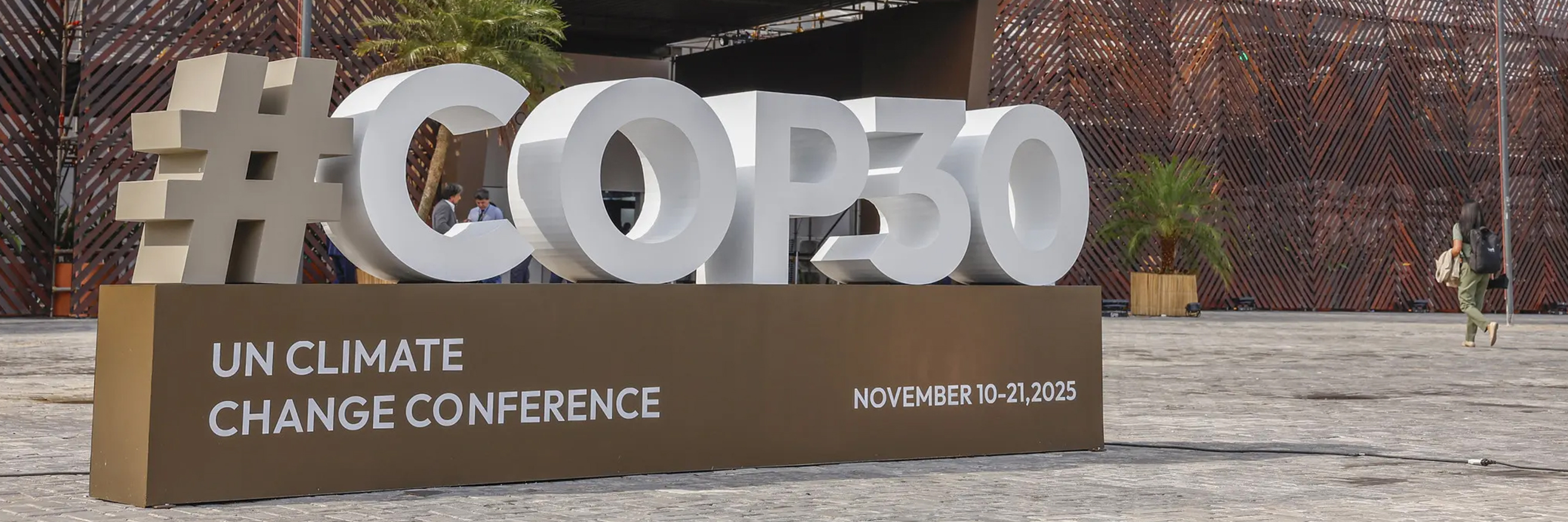
The Global Initiative for Economic, Social, and Cultural Rights (GI-ESCR) will participate in the 30th Conference of the Parties to the United Nations Framework Convention on Climate Change (COP30) from November 10-21 in Belem do Pará, Brazil.
After the wrap of the 62nd sessions of the Subsidiary Bodies (SB62) in June, marking the official starting line for what could be one of the most pivotal climate COPs, States established a critical agenda for COP30, with key deliverables including establishing a just transition framework, defining a global goal on adaptation, updating the gender action plan, scaling up climate finance and delivering the Nationally Determined Contributions before the end of 2025. With these goals in mind, this year’s COP has the potential to deliver on real climate action.
In the climate negotiations at COP30, GI-ESCR will actively engage and focus its attention on the following key issues to ensure economic, social, cultural and environmental rights in climate policy.
Just Transition: Steering a Just and Rapid Transformation Towards Sustainable Societies and Economies That Protect People and the Planet
The concept of a just transition has become central to discussions on the social justice dimensions of climate action. Over time, it has evolved to encompass not only workers’ rights but also the broader systemic transformations required to build fair, inclusive and sustainable societies and economies. At COP30, GI-ESCR will advocate for embedding human rights and gender equality at the core of the UNFCCC’s work on just transition, ensuring that climate action drives transformative change for people, communities and the planet; we will also push for stronger mechanisms for monitoring and implementation of just transition policies with the aim of achieving greater impact on the ground and serving as an instrument for communities.
One of the core mechanisms within the UNFCCC to advance this vision has been the Just Transition Work Programme (JTWP). Established at COP27, it aimed to create spaces for knowledge sharing and encourage conversations with different stakeholders to develop promising practices for just transition frameworks and strategies. Over the last two years, the JTWP has hosted dialogues covering issues ranging from “whole economy” approaches to the just transition and adaptation to climate financing.
In 2026, the mandate of the JTWP comes to a close. This COP30 will have to decide on how to continue the work on just transition within the UNFCCC. In June, at the SB62 meeting in Bonn, there was an agreement to recommend the consideration and adoption of a decision on just transition at COP30 that includes (i) the recognition of specific guidance on just transition based on the dialogues held by the JTWP; and (ii) a determination of how the just transition work will continue from 2026 on. That agreement acknowledged an informal note from the Just Transition Work Programme (JTWP), prepared by the co-chairs, which gives us some clues as to where the negotiations could go in Belém.
As to the recognition of specific guidance on just transition (currently, paragraph 11 of the informal note), the informal note currently includes elements highlighting that just transition pathways have to be integrated into Nationally Determined Contributions (NDCs), National Adaptation Plans (NAPs), and Long-Term Low Emission Development Strategies (LT-LEDS); the importance of social dialogue, labour rights and decent work; inclusive participation of all stakeholders, including affected workers, Indigenous Peoples and people in vulnerable situations; the need for whole-of-society and whole-of-economy approaches; the integration of adaptation and resilience; and the protection of ecosystems and biodiversity. In particular, the draft text includes the recognition of the importance of facilitating universal access to clean, reliable, affordable and sustainable energy for all. The inclusion of this element is pivotal, as transition policies must not only reduce emissions but also address the root causes of the climate emergency and the structural inequalities that persist between and within countries. The transition to environmentally sustainable societies should generate social and economic benefits for all, with a particular focus on those living in energy poverty, ensuring their access to clean, renewable, efficient and safe energy sources. Equitable access to sustainable energy is essential for the realisation of human rights and for ensuring that no one is left behind.
Moreover, the draft text also includes the recognition of the necessity of adopting a gender- and human rights-based approach to just transition policies. Embedding gender and human rights at the centre of just transition strategies is vital to guarantee that climate action drives not only environmental sustainability but also helps build just and equal societies. A rights-based approach requires that all stages of the energy transition —from the extraction of critical minerals to the generation, transmission and consumption of renewable energy— uphold international human rights standards, including the rights to equality and non-discrimination, with particular attention to gender equality and the empowerment of women and gender-diverse people.
Overall, the current draft text represents a balanced and forward-looking foundation that reflects many of the key dimensions of a rights-based and inclusive just transition. It will be important for Parties to preserve and, where possible, further strengthen this language in the final decision. In particular, it will be fundamental to maintain the gender- and human rights-based approach in the resolution, which is essential to achieve truly just and equitable transitions that do not replicate existing inequalities or create new forms of exclusion. To consolidate and strengthen the resolution, an additional element could address the continuous escalation of global energy consumption. The text should acknowledge that transition policies must also aim to reduce energy demand and scale down harmful, energy-intensive industries —of which one of the more problematic is the defence industry —, in order to align the transition with ecological limits and human rights obligations. This requires moving away from a model of “energy addition,” in which renewable energy is merely layered on top of fossil fuels, towards one that actively phases out polluting sectors while fostering new, sustainable forms of livelihood.
As to the continuation of the work on just transition, the negotiations at the SB62 left the door open for the potential establishment of an institutional arrangement focused on the implementation of just transition policies by parties. This proposal has been called the Belem Action Mechanism (BAM) for a Global Just Transition, which would continue and enhance the work of the JTWP. The potential establishment of the BAM shows that COP30 offers an opportunity to advance a strong mechanism to tackle just transition and ensure its effective implementation. At the same time, the outcome is still unclear: the draft text of the negotiations in Bonn also considered two potential less ambitious alternatives: improving the existing modalities of the Work Programme, without creating any new structure; or deferring the decision to next year.
GI-ESCR's position is that the Parties must establish a robust Belem Action Mechanism that is actually capable of providing guidance and support to countries transitioning to low-carbon economies without leaving anyone behind and, at the same time, upholding the principles of equity and common but differentiated responsibilities and respective capabilities. The new mechanism must help ensure a rapid and equitable phase-out of fossil fuels and a shift towards sustainable economies and societies that create better conditions for the well-being of people and the planet. UNFCCC’s mechanisms must go beyond providing spaces for the exchange of best practices and present concrete, actionable recommendations for national climate policies to accelerate, consolidate and achieve a holistic just transition, within and between countries, through national action and international cooperation, including knowledge, technology, and resource transfers.
Climate Finance: A Rights-Based Baku to Belém Roadmap to Overcome the Shortcomings of the New Collective Quantified Goal
Climate finance is at the core of the most pressing urgencies that the climate emergency poses to current international demands. The scale, speed, and scope of the systemic change required to achieve emissions reductions and transformative adaptation to climate change can only be possible through human history's most unprecedented mobilisation of resources. Thus far, climate finance flows remain inadequate and inequitably distributed, disenabling transition policies. The countries and communities bearing the brunt of climate impacts often lack the resources to fund their own transitions, while those historically responsible for emissions have failed to adequately comply with their climate finance obligations. At COP30, GI-ESCR will advocate for the scaling up of predictable, innovative public finance, through highly concessional grants and other non-debt-creating instruments.
While the adoption of the New Collective Quantified Goal (NCQG) on climate finance at COP29 in Baku was certainly a step forward, the decision fell short of what is needed to respond to the scale and urgency of the climate crisis. COP30 and the Baku to Belém Roadmap must now bridge those gaps by translating the NCQG into a credible plan that reflects the scale of needs—well above USD 1.3 trillion annually—and by addressing the structural barriers that prevent developing countries from accessing adequate resources. This requires a clear pathway for scaling up predictable, innovative and additional public finance, comprised by grants and highly concessional instruments, and ensuring fair burden-sharing among developed countries in line with equity, the principle of common but differentiated responsibilities and respective capabilities (CBDR-RC), the polluter-pays principle, and extraterritorial obligations in terms of Economic, Social and Cultural Rights.
Human rights must be placed at the heart of this effort. The recent Advisory Opinion of the International Court of Justice confirmed that States carry legal obligations under international human rights and environmental law to provide finance at the level and in the form required to enable ambitious mitigation and adaptation efforts, and to safeguard a clean, healthy and sustainable environment. In that sense, the Baku to Belem Roadmap should explicitly acknowledge these obligations, ensuring that climate finance drives ambition rather than deepening inequality. This means prioritising grant-based support that expands fiscal space without adding to debt burdens, while guaranteeing that funds reach those most affected by the climate emergency, including women, Indigenous Peoples, youth, persons with disabilities, workers, and other groups facing structural exclusion.
Delivering on this vision also demands decisive action with regard to the systemic inequities shaping the global financial system. The Roadmap should explicitly align with and reinforce the ongoing negotiations for a United Nations Framework Convention on International Tax Cooperation as a central avenue to generate sustainable and equitable sources of public finance. Progressive taxation of the ultra-rich, multinational corporations and fossil fuel windfall profits, combined with measures to tackle illicit financial flows and dismantle tax havens, are indispensable to mobilise resources at the necessary scale to provide an effective and time-sensitive response to the triple planetary crisis. These reforms are also key to advancing a just economic transition that ensures those most responsible for the climate emergency bear its costs, while creating the fiscal space needed in developing countries for rights-based climate action.
Finally, for the Baku to Belém Roadmap to have a tangible impact, it must go beyond aspirational statements and set out immediate and actionable measures that States can undertake in the short and medium term, such as in the next two to five years. This includes scaling up finance for adaptation and loss and damage—primarily through grant-based and gender-responsive support—while significantly increasing resources channelled through multilateral climate funds such as the Green Climate Fund, the Adaptation Fund and the Fund for Loss and Damage. Clear criteria for establishing what counts as climate finance is also urgently required, including exclusions for market-rate instruments or fossil-related investments, and concrete steps to align financial flows with both the Paris Agreement and binding international human rights obligations. By embedding short-term action within a longer-term vision, and grounding climate finance in human rights and global tax justice, the Baku to Belém Roadmap can turn from a political compromise into a genuine instrument for climate justice and sustainable development.
Gender Equality: A new, Strengthened Gender Action Plan to Achieve Gender Equality in Climate Action
The climate emergency deepens existing social, economic, and political inequalities and disproportionately affects women, girls, and non-binary people. At the same time, these groups are often excluded from climate decision-making. Both climate impacts and adaptation and mitigation measures can entrench gendered power imbalances: women’s overrepresentation in informal and care work limits access to reskilling; male-dominated land tenure increases women’s risk of dispossession; and unclean household energy causes millions of deaths each year, mostly among women and children. At COP30, GI-ESCR will advocate for a gender-transformative approach to climate action, one that centres the voices of women and gender-diverse people in decision-making, tackles structural inequalities across all stages of the energy transition, and ensures equitable participation in the green transition. Gender equality and women’s rights must be mainstreamed in all areas of the UNFCCC to raise ambition and undertake climate action that doesn’t leave anyone behind.
The Enhanced Lima Work Programme and the Gender Action Plan are the main instruments adopted to promote gender equality under the UNFCCC processes. At COP 29, Parties concluded the final review and decided to extend the enhanced Lima work programme on gender for 10 years. Additionally, it was also decided that a new Gender Action Plan would be developed. The development of the GAP took place this year through two workshops, one at SB62 and another at the regional climate week in Addis Ababa, Ethiopia, which produced an informal note and an informal summary that will serve as the basis for further negotiations at COP30.
Overall, the current draft text is a strong foundation for the new GAP built through collaborative work that reflects and addresses many key demands to push for gender transformative climate action. It will be essential for Parties to preserve and further strengthen this proposal for the Plan. In particular, it will be crucial that parties do not go back on already agreed-upon human rights language to ensure that the GAP can advance substantive gender equality. The final decision for the GAP must include a strong intersectional perspective with indicators based on human rights norms and principles. It must also promote the participation of women and gender diverse populations, including those from indigenous, afro descendant and other racialised or marginalised groups, who are usually marginalised, and support coherence in the adoption of a gender perspective in all UNFCCC areas of work.
It will also be crucial for the new version of the GAP to maintain and mainstream the inclusion of care as a focus throughout its different priority areas and activities to advance the achievement of a care society —one based on interdependence and eco-dependence, as constituent dimensions of individuals and their network of social, interpersonal and environmental relationships. The inclusion and mainstreaming of care in the GAP is essential due to the twofold interconnections between care work and the environment. On the one hand, these phenomena are linked from a care perspective, through the restless work that Indigenous and rural peoples —usually women and girls— do to maintain a healthy and thriving planet. This maintenance and support work cannot be persecuted, or even overlooked, and should be recognised as the fourth component of the human right to care and support. On the other hand, care work and responsibilities undoubtedly increase as the climate emergency escalates. Whether by climate-related disasters threatening critical infrastructure such as health and education facilities, or due to the erosion of local ecosystems essential for food production, which increases health risks, the truth is the need for care is increasing, falling disproportionately on the shoulders of women and girls, who already suffer the consequences of highly strained, informal, and underfunded care systems.
The inclusion and mainstreaming of care in the GAP would bridge the environmental and care movements, fostering a just transition toward not only a sustainable economy but a sustainable society and planet. Integrating care as a focus of the activities of the new GAP, in priority areas such as capacity building, but also in implementation areas, like priority area D, can help advance effective gender-transformative climate action. This represents a crucial opportunity to create an ambitious GAP capable of delivering substantive gender equality in climate action.
These are the priority areas and demands that GI-ESCR, jointly with partners, will focus on advancing at COP30 in Belém by actively coordinating and engaging in side events and contributing to collective advocacy strategies that will inform and influence climate negotiations.
To answer questions, explore opportunities for collaboration, and coordinate with media, please contact the following GI-ESCR team members who are following COP30 negotiations in person:
- Maggie Rochi
This email address is being protected from spambots. You need JavaScript enabled to view it.
- Valentina Contreras,
This email address is being protected from spambots. You need JavaScript enabled to view it.
- Ezequiel Steuermann,
This email address is being protected from spambots. You need JavaScript enabled to view it.
- Martín Pintus,
This email address is being protected from spambots. You need JavaScript enabled to view it.
- Macarena Cano,
This email address is being protected from spambots. You need JavaScript enabled to view it.
- Emilia Guzmán,
This email address is being protected from spambots. You need JavaScript enabled to view it.
Related Articles
SITEMAP
TAKE ACTION
NEWSLETTER
